
Sex!... wait, did I do my laundry?
Sometimes the problem isn’t “I don’t want sex.” Sometimes it’s “My brain and body are not in a state where sex feels accessible right now.”"
by Indya Marković
In college, sex was novel and fun and, honestly, I may have been a little sex-crazed. Sex was an escape from loneliness, school, work, and all my other stresses. It was experimental, messy, adventurous, and often with different people. I wasn’t “tied down” to a partner and was living my true free-spirited life.
But you know what? Sex while in a relationship was different. At first, it was hot and exploratory and spontaneous. Yet once I got comfortable, I found I no longer craved it. Then the longer time went on, the more I forgot about it. And then came the guilt. I no longer wanted sex. I thought something was wrong with me. I thought I wasn’t attracted to my partner.
With my ex, I even went so far as to get tested and start using testosterone cream… as a 23-year-old! Now, I’m not against this, but for me, that wasn’t the true issue.
My ex isn’t exactly the best example, for reasons I don’t need to explain here. But here I am in a new, healthier relationship, and the same thing has happened. I think, “What’s wrong with me?!”
I never considered that my ADHD could be part of the reason. ADHD can impact our sex lives in ways that aren’t always obvious, and it can look very different from person to person. Let’s unpack it.
Novelty, impulsivity, and sex
Sex for people with ADHD can be either the greatest thing ever or the biggest chore. There may have been a time in your life when you were a horny bunny, humping your way around, or you may be in a period where you completely forget what sex is, much less want to be doing it.
ADHD is associated with differences in sexual behavior, including earlier sexual experiences, more sexual partners, and greater sexual impulsivity. You may be curious, impulsive, and have a harder time setting boundaries, which can lead to more sexual interactions and, sometimes, risky sex, emotional emptiness, or unsafe situations.
You may also use sex to self-soothe, seek validation, regulate your emotions, or feel connected. Low self-esteem and a lack of meaningful connection can also play into seeking sexual relationships.
I can say that I have experienced all these things. I have used sex when I was lonely, bored, sad, insecure, curious, and more.
Shame, emotions, and relationships
Self-blame and shame can be especially intense for people with ADHD, and this can show up in our sexual relationships, too. You may blame yourself for a lack of intimacy or mismatched desires. You may feel ashamed for your sexual history or your sexual fantasies. You may have perceived having less sex as a confirmation to your failing in the relationship(s) or your body.
Emotional dysregulation can also affect relationship satisfaction, which can then affect sexual desire. And we may deal with shame about our performance or our bodies that feels even more intense when rejection sensitivity gets involved.
Learning about ADHD helped me understand—and eventually let go of—so much of the shame I carried about my sex life from an early age.
Executive dysfunction, distraction, and sensory issues
ADHD affects executive function, and that can show up in our sex lives in a lot of different ways. We may struggle to stay present during intimacy because our brains are somewhere else entirely.
The dishes. The laundry. The email we forgot to send. The thing we must do tomorrow. The list goes on.
These things not only overwhelm us and keep our brains busy, but they also lead to overall exhaustion that doesn’t leave room for us to lean into sensuality.
And then there are sensory issues. Sensory sensitivity is a major thing for me. You may be sensitive to things like lights, sounds, touch, certain sensations, bodily fluids, smells, or textures. Those things can be a very effective way to get you out of the experience and straight into your head.
Sometimes the problem isn’t “I don’t want sex.” Sometimes it’s “My brain and body are not in a state where sex feels accessible right now.”
That distinction was huge for me.
So, what do we do with this information?
Context matters. If you know you can’t get into a sexy mood with the dishes not done, the big lights on, and the dog barking… then don’t! We can curate our environments to ease our sensory sensitivities. Maybe spend the day cleaning, board the dog for the evening, dim the lights and pamper yourself with an everything shower.
Create transitions into intimacy. Much like our context, transitioning into a sensual mindset is just as important. Many people with ADHD struggle with transitions from task to task, so to creating buffer activities for you and/or partner(s). You can take a bath together, play a fun game, home cook a meal, dim the lights, intentionally unplug from devices, etc.
Communicate your needs to your partner. Tell them how much hygiene matters to you. Let them know if certain types of touch, speeds, or areas are uncomfortable. Tell them what context you need and what you like. Foreplay, hellooo. Explain what mental load is and have them take on some of your to-do list. (Is anything sexier?!)
Introduce novelty. Explore new ways to connect and have fun. You can try changing the environment, try new sex positions or toys, role play, play a game, etc. Personally, when sex gets monotonous, I lose all interest!
It’s okay if you don’t want to have sex! Seriously. You don’t owe anyone sex, including a partner. But if a difference in desire is causing frustration for you or your relationship(s), experiment with some of these things. You might even try scheduling intimacy. I don’t necessarily mean scheduling sex every Tuesday (although that works for some people). I mean scheduling the conditions that help you feel connected and open to intimacy: clean the house, send the kids somewhere, pamper yourself, read a steamy book, go on a date, and see what happens.
Let go of the shame. Easier said than done, I know. But I hope this helps normalize some experiences that are more common than we realize. If you’ve engaged in risky sexual behavior, had many sexual partners, started having sex young, or experienced periods of hypersexuality, you are not inherently broken or bad. If you are now averse to sex, you are also not broken! When sex starts feeling like a chore, of course you wouldn’t want to do it!
Our brains are wired to seek novelty, and ADHD can influence how we experience novelty, impulsivity, emotions, and reward. Sex is a normal part of human existence that can be affected by our ADHD, just like all other parts of our lives.

Indya Marković is a Licensed Marriage & Family Associate in our practice and she’s currently seeing individuals, couples, or polycules via telehealth. Learn more and connect with Indya here!
Own your story.
And, of course, please practice safe sex.
Sex Positivity Interview Series
“I define sex-positive/sex-positivity as a lens or framework that both invites curiosity and openness about all topics related to sexuality and nourishes a therapeutic container where clients can be assured that topics pertaining to sexuality belong in their therapy treatment.”
by Caroline Wilson
Sex-positive therapy means a lot around here.
If you have ever spoken with me about the path that led me to working at Out of the Woods Therapy, you likely have some knowledge of my passion for what is broadly referred to as sex-positivity. And when I say I feel passion, I mean both enthusiasm and suffering. When it comes to the concepts I love, I am a messy eater. I question and pick apart, I analyze and challenge, I critique and confront. It’s just who I am.
Sex-positivity is one of those things for me–it may be, at least in my professional life as a psychotherapist and clinical director of a group practice that specializes in sex-positive therapy, the thing. If I have to pin down a definition–please don’t make me–but I know I do–I define sex-positive/sex-positivity as a lens or framework that both invites curiosity and openness about all topics related to sexuality and nourishes a therapeutic container where clients can be assured that topics pertaining to sexuality belong in their therapy treatment.
I once had a client tell me that they were drawn to work with me because I listed sex-positivity as a value in my biography. They felt they would be more affirmed and validated in their asexuality by a sex-positive provider than by previous therapists who had pathologized their sexuality. They were comfortable talking to me about their own unique experience of being on the ace spectrum, and they were comfortable talking to me about their own unique experience of occasional attraction or crushes. They could trust that I didn’t have an agenda other than to welcome their exploration, their agency, their dynamism.
It’s important to me that any of the populations we serve at Out of the Woods know that our clinicians are dedicated to providing sex-positive therapy and welcoming of sex-related material in the treatment, no matter what they came to therapy for.
Because of my aforementioned predilection toward grappling with meaning, I want to explore both the utility and magic of what sex positive therapycan mean, for any provider, for any client. In this series, I extend my curiosity to our clinical team and report back from our clinicians as I pose this question to them– What does sex-positivity mean to you, in your work with your clients?
My hope is that these short explorations with our team here at Out of the Woods will encourage thoughtful, and perhaps even playful, reflection of how sex-positivity can be of service to anyone in any realm of their therapy, whether they are the provider or the client, and how different providers embody this value in their work.
I had the pleasure and honor of hiring the three clinicians I will be highlighting today, and have many, many wonderful things to say about each of them, but for the sake of staying thematic, please keep reading to find out just a little bit about what sex-positivity means to Hannah Baker, Jenn Gift, and Natalie Wolfe. I spoke to Hannah, Jenn, and Natalie more than a year and a half ago back when I had the ambitious inclination to start this project. I suppose on its face it isn’t ambitious for some–talk to people you like about things you’re interested in, and write about it– but I struggle with procrastination, so here we are.

Hannah Baker, LCMHC, LCAS
Learn more about Hannah
Hannah has been with the practice since January 2024. I was ready to hire Hannah on the spot after our first interview and indicated as much at the second interview. She said she needed time to consider her options, to honor her decision making process, to take it in and slow down before making a next step. I really like that about Hannah. She’s intentional. She returned to us and has been with us since.
Hannah spoke about the sex-positivity being a way to “get really curious about others’ experiences, and even expanding the definition of sex.” Hannah spoke about how when we can more broadly define sex outside of a narrow window of acts or behaviors, and get curious about our clients definitions, we get to include exploration about sensory experiences, one’s stories about their lives or their bodies, and we may even discuss grief about what we have to leave behind.
Hannah also shared a wish for prospective clients: “You don’t have to get better before coming to therapy or go through it alone … you can believe anything you want about therapy, and still come in anyway!” Here, here.

Jenn Gift, LCMHC
Learn more about Jenn
Jenn has also been with the practice since January 2024. Jenn has a fondness for working with neurodivergence, supporting her clients in finding ways to be themselves in a world that often denigrates or poses barriers to their thriving. In so many ways, too numerous to list here, the same values that create conditions for sex-positivity also uphold the wisdoms of people who have been told their brains in and of themselves are pathological. Jenn knows this intimately and is deeply empathic and attuned to our human need to be understood.
So when Jenn talks about the importance of sex-positivity for her clients, she speaks directly to the ways people who are neurodivergent have often internalized embarrassment, shame, or discomfort about who they are from an ableist society. Jenn said, “If we say [we] are sex positive, we have to be positive about anything that feels embarrassing or uncomfortable, or that we could feel ashamed to talk about… Anything that society tells us not to talk about.”
Jenn describes sex-positivity as “An invitation to talk about all the most vulnerable and squishy things… it’s so much broader than just sex–once you feel more comfortable to talk about one thing, it becomes easier to talk about another.”
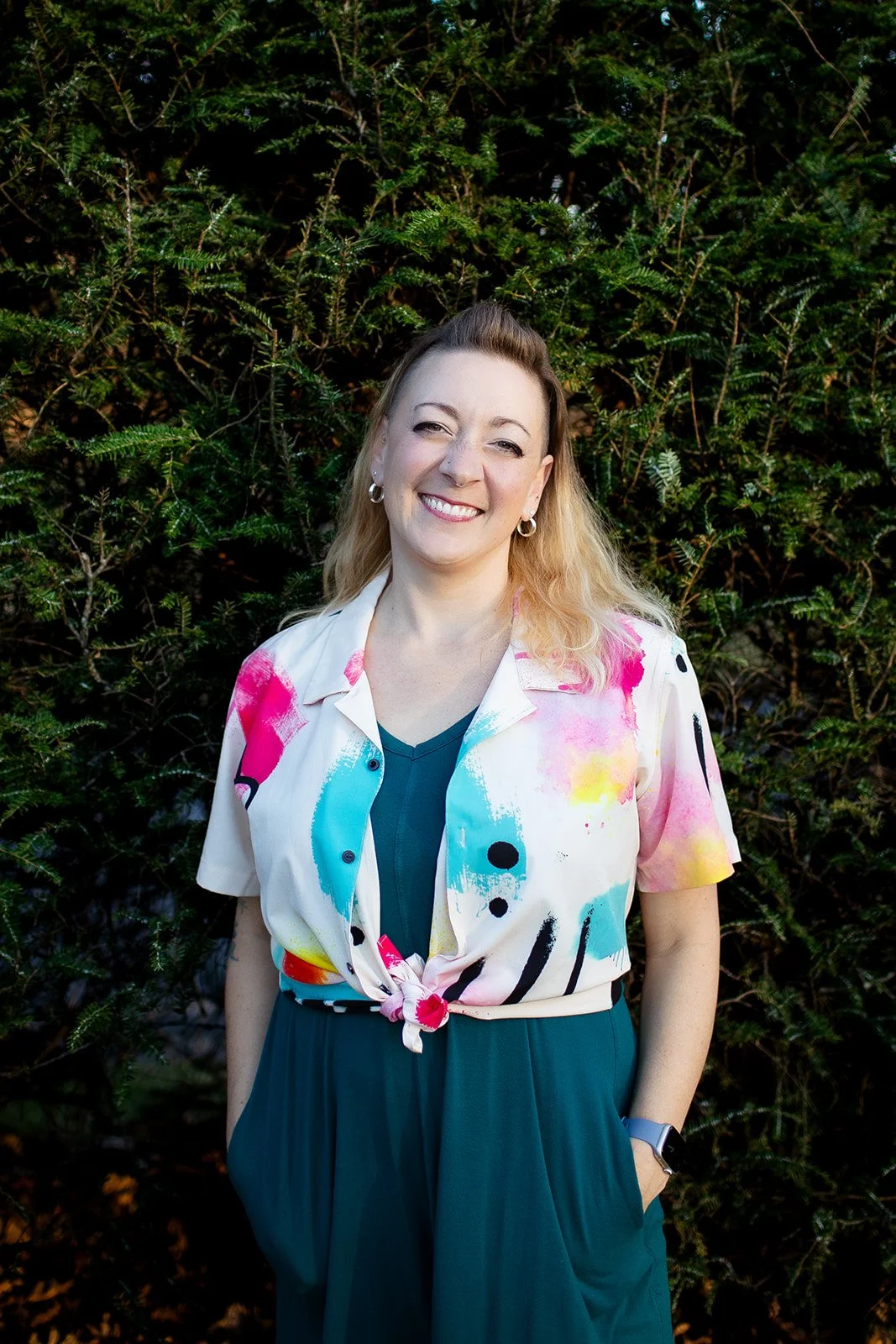
Natalie Wolfe, LCMHC
Learn more about Natalie
Natalie, believe it or not, has also been with us since January 2024. Similarly to Hannah and Jenn, I wanted to hire her immediately. Natalie has an enthusiasm that is contagious, she is full of ideas and energy, and she also loves supporting people in navigating neurodivergence.
Natalie spoke about sex-positivity being a value that reminds us that the provider-client relationship is a human relationship, where modeling curiosity, non-judgment, and willingness to try new things can enhance the therapeutic encounter. Natalie is a big believer in trying new things, and spoke about her encouragement that prospective clients be empowered to ask their therapist questions and share if the course of treatment isn’t aligning with their needs. Natalie spoke about the importance of seeing the whole person–including any aspects of their sexual self–as worthy of getting their needs met.
In a statement that parallels any exploration, Natalie said of sex-positive therapy approaches, “Sometimes what is working is slow, and takes a long time.” I find this to be an especially poignant reminder about therapeutic treatment, as it gives compassionate permission to one’s own process, releasing, if only for a time, the enormous pressure to fix or figure it out that we can often place on ourselves, especially when it comes to sex.
Thank you for taking the time to read. I promise I’ll be back with another installment, before Valentine’s Day of 2027.
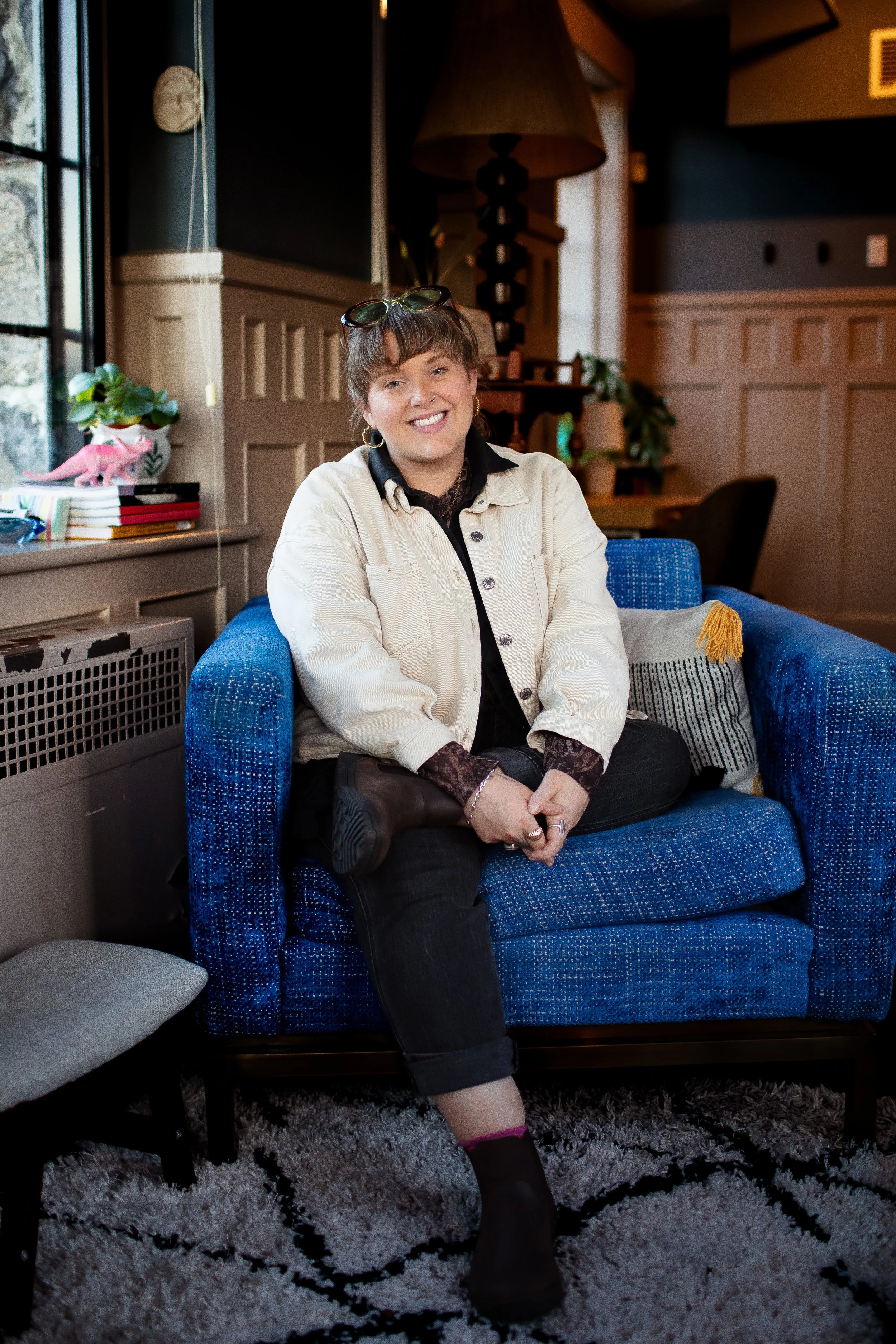
Caroline Wilson, LCSW
Learn more about Caroline here.
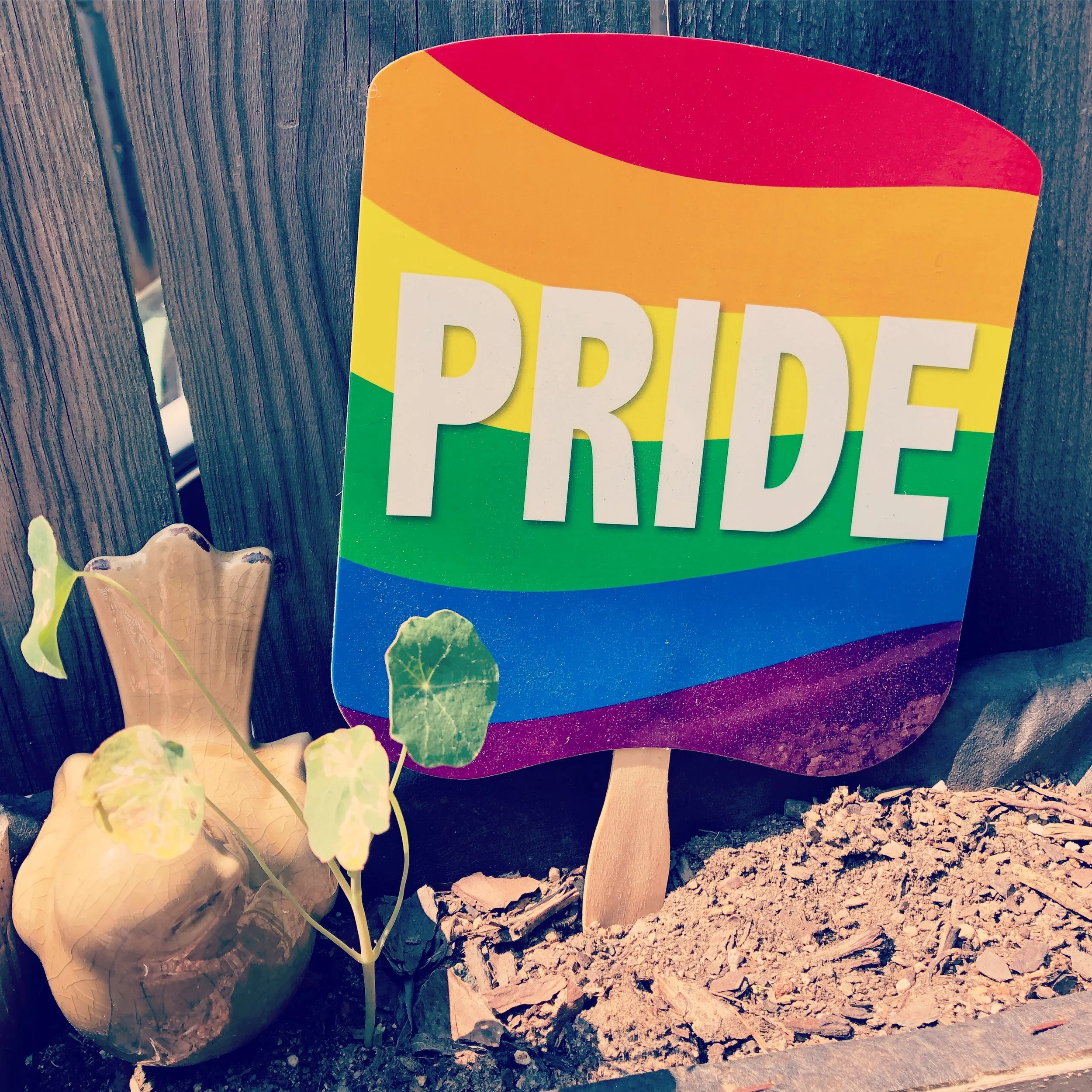
On Coming Out and Pride by Jamie Zane Brazell
I think that pride is a good antonym for shame.
If shame tells us we are inherently bad or unlovable then surely pride tells us that we are worthy and we belong. That’s the whole point, isn’t it?
I came out as bisexual when I was in high school. This was in the 90s and it was common to hear things like, “Female sexuality is fluid.” So when a boy or man came out as bi, it was assumed that he was actually gay and it was just a matter of time before he was fully out about it. But for me it was probably seen as some sort of rebellion, fad, or even a performance act for men. I reject all of those assumptions.
I did struggle with my own internalized homophobia before I was honest with myself about my attraction to women. It still makes me cringe to think about a situation when I was in love with my best friend, she kissed me in our room one night at field hockey camp, and I immediately went cold, saying, “Your not going to do that again, are you?” If I were magically granted a number of times to go back in time and redo something I did or said, that moment would easily be in my top five.
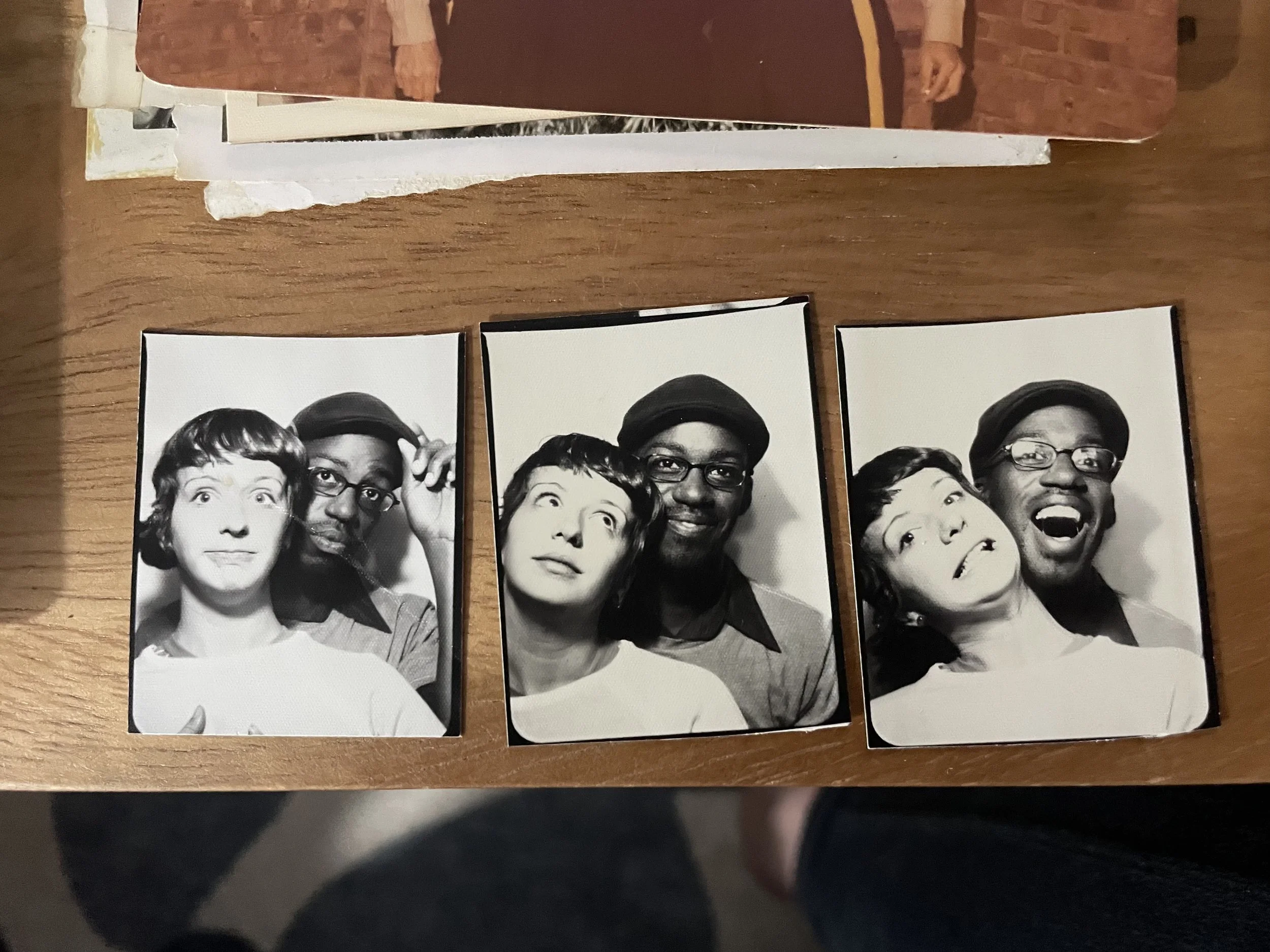
Devo & Me, FG since the 90s
FG = our code for F-ing Gay
It felt somehow safer to come out when I moved from Catholic school to public school in 10th grade. Maybe it was falling in platonic love with another bestie who was openly gay in our New Jersey high school in the 90’s. Thinking back on what we were on the heels of - the HIV/AIDS crisis - and in the midst of - Ellen’s “Yep, I’m gay” announcement on the cover of Time magazine. it still wasn’t exactly safe to come out and yet here was Devo - the leader of our flaming little queer club, snapping in the hallways when we saw each other. Theatre kids who defied conventional coolness with our manic-pixie 90s edge.
Since those precious days, I have come out many, many times.
I did the thing that a lot of bi women do and I married a heterosexual man. This means I feel compelled to come out to anyone who is new to me - especially since I am the owner of this practice and we wave rainbow flags all year long. They don’t disappear in July like the Halloween decorations do in November. Pride is a daily commitment for us.
So yes, I married a cis man, but I still get to be queer. It’s uncomfortable for me sometimes when I meet someone new and I’m using the word husband. That’s usually the moment when I feel like I have some explaining to do - because how can I own this incredibly sex-positive, queer-celebrating practice and be in such a hetero-normative looking relationship? There’s a privilege in passing, but it’s not worth the shame of staying closeted and the betrayal I would feel if I pretended as if my identity shifted just because I married someone who would be deemed socially acceptable by people I don’t care about.
Bi people sometimes feel like we don’t have a place in straight land or in queer land, but I really don’t suffer from that problem because I am surrounded by chosen-family queer community and that makes me feel both seen and safe in the world. I do think it’s not unusual for any queer person to have multiple coming out stories. And it’s also sadly not unusual for queer people - even this far away from my days in the 90s - to grapple with internalized homophobia or to find themselves in unfriendly environments that cause them to remain in the closet until it’s safe to emerge.
Coming out stories are plural because a queer person doesn’t just come out once, but often they are required to identify themselves over and over again any time they meet someone new, find themselves in an unfamiliar environment, change jobs. And it’s obviously not always safe to be honest about who we are - sometimes even to ourselves in certain circumstance.
I know that it’s helpful to others when queer people stay visible and show that we are unashamed of who we are. So in honor of the end of Pride month, I just wanted to put it on record that I’m here, still definitely queer, and most certainly not ashamed of it.

All Things Sex by Ashlyn Hawkins
“Sex can be playful, tender, intense, awkward, healing, messy, joyful, or all of the above. It can be about pleasure, bonding, expression, stress release, or closeness. Sometimes it’s deeply emotional; sometimes it’s just fun. Sometimes it changes as life changes.”
All Things Sex

Sex is one of the most human things we experience—and somehow also one of the least talked about in honest, grounded ways. For something so central to connection, pleasure, identity, and vulnerability, many of us were given very little language for it beyond silence, shame, or rigid rules.
At its core, sex isn’t just about bodies. It’s about connection, communication, curiosity, and consent. It’s about how we relate to ourselves and to others. And it looks different for everyone.
Consent: More Than a Yes or No
Consent isn’t a one-time checkbox or a legal script. It’s an ongoing, living conversation. It’s about paying attention—to words, body language, energy, and timing. Consent can change. It can be enthusiastic one day and hesitant the next. It can be withdrawn at any point.
Real consent is rooted in safety and respect, not pressure or obligation. When consent is clear, sex becomes less about performance and more about presence.
Boundaries Are a Kindness
Boundaries often get a bad reputation, as if they limit intimacy. In reality, boundaries are what make intimacy possible. Knowing your limits—and being able to express them—creates trust. It allows people to relax and show up more fully.
Boundaries aren’t walls; they’re information. They can include physical limits, emotional needs, pacing, aftercare, privacy, and communication preferences. And they can evolve as you learn more about yourself.
Likes, Dislikes, and the Space In Between
You’re allowed to know what you enjoy. You’re also allowed to not know yet.
Sexual preferences aren’t fixed personality traits—they’re shaped by experience, safety, curiosity, and self-trust. Some people have clear likes and dislikes. Others discover them slowly through exploration. Both are normal. What matters isn’t fitting a label, but listening to your body and honoring what feels right for you.
Honesty Builds Safety
Honesty in sex doesn’t mean oversharing or having all the answers. It means being real about your needs, your uncertainty, your desires, and your limits. It means naming things like:
“I’m curious but nervous.”
“I don’t like that, but I might like this.”
“I need to slow down.”
Honesty creates emotional safety, which often leads to deeper physical connection.
Exploration Without Shame
Curiosity is not a flaw—it’s a natural part of being human. For some people, exploration happens within monogamous relationships. For others, it may include ethical non-monogamy, polyamory, kink, or BDSM.
These experiences are not about being reckless or avoidant. When practiced with intention, they’re built on communication, consent, and responsibility. Ethical non-monogamy and polyamory often require a high level of emotional awareness—talking openly about needs, jealousy, time, and care. Love and desire don’t always follow neat rules, and many people find relief in naming that truth.
BDSM, Kink, and Trust
Kink and BDSM are often misunderstood because they challenge mainstream ideas about sex and power. In reality, these dynamics are frequently rooted in deep trust, clear communication, and negotiated consent. Power is not taken—it’s offered.
For some people, kink is playful or erotic. For others, it’s grounding, connective, or even healing. Structure, ritual, and agreed-upon roles can create a sense of safety that allows vulnerability to emerge.
There is nothing inherently unhealthy about consensual kink. Like any sexual expression, what matters is intention, communication, and care.
Sex as Connection
Sex can be playful, tender, intense, awkward, healing, messy, joyful, or all of the above. It can be about pleasure, bonding, expression, stress release, or closeness. Sometimes it’s deeply emotional; sometimes it’s just fun. Sometimes it changes as life changes.
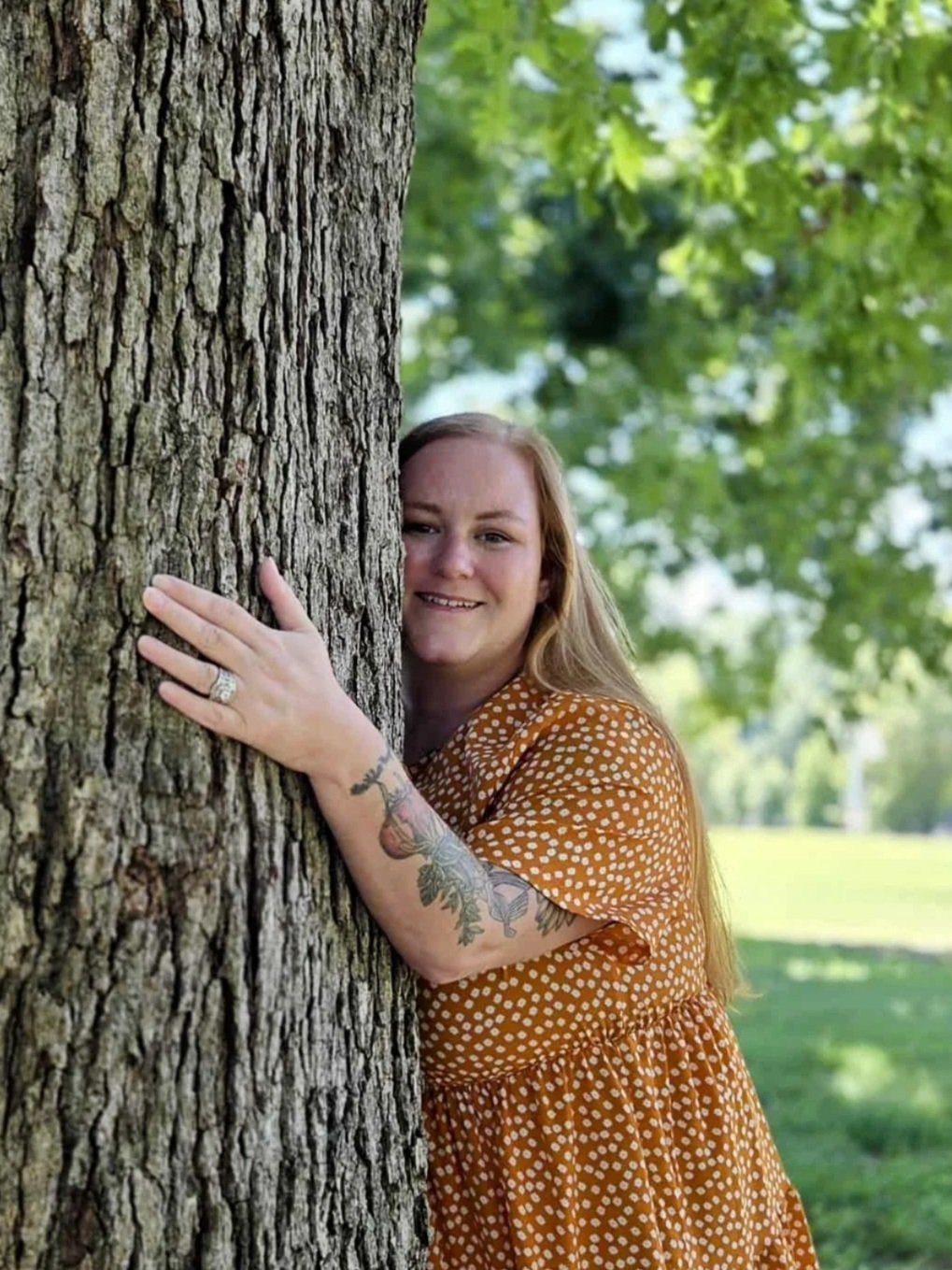
Ashlyn Hawkins, LMFTA
There’s no single way sex is supposed to look. When approached with curiosity, care, and compassion, sex becomes less about getting it “right” and more about relating—to yourself and to others—in honest and meaningful ways.
Your desires, questions, boundaries, and experiences are part of your humanity. They don’t need to be minimized, hidden, or justified. They just need space to be understood.
And that space matters.
This piece was written by Ashlyn Hawkins, LMFTA. Ashlyn sees couples, polycules, individuals, kinksters, vanillas, queers, straights, and everyone in between for virtual therapy sessions. Ashlyn isn’t afraid of talking about sex with her clients, nor is she afraid of addressing relational conflict.
Ashlyn can take most BCBS, Aetna, Medcost, or Ambetter insurance plans.
To learn more and to reach out to Ashlyn directly, click here.
Attachment Styles: Moving From Types to Cycles to Create Deeper Understanding by Jordan Stonecypher
Attachment theory seems to be everywhere these days—and I’m here for it. As a therapist, it’s my home base for how I like to understand the clients I work with. But the more I dive in, the more I notice something tricky: attachment styles aren’t as fixed as we often like to think.
As someone who’s spent a lot of time studying attachment for both personal and professional reasons, I often catch myself thinking: “Am I anxious? Avoidant? Anxious-avoidant? And honestly… It can get real messy in this well-intentioned brain of mine.
Here’s the pickle: I notice myself trying to identify my own—or others’—attachment styles, only to realize that behaviors shift depending on the context of the situation and who is involved. One second, I might notice anxious tendencies; the next, avoidant behaviors. Trying to neatly categorize these experiences into ‘what am I’ feels frustratingly impossible- causing me to spiral into overthinking, and then I throw the baby out with the bathwater altogether. Not helpful.
Why is it so hard to get a clear answer about attachment styles? I came to this conclusion for myself, and maybe you relate too: when we have a mindset of fitting people into boxes (a lot of time because that is what feels safest for us), we lose the complexity and nuance of relationships and the human condition that actually describes us most authentically.
So what may be a more helpful way to think about it? These are two ways of thinking that have started to guide my understanding of attachment styles without losing my mind:
A category will never capture the whole human experience. Attachment styles, personality types, or diagnoses can describe part of a person, but they don’t define the entirety of someone’s lived experience.
Focus on cycles, patterns, and processes. Instead of asking, “What type am I?” I ask, “What patterns am I noticing in myself, in others, and in the human experience?”
So what does this look like in practice? Let’s take romantic conflict as an example. A common pattern in attachment is the pursuer-withdrawer cycle: one partner expresses needs anxiously (the pursuer), and the other withdraws or disengages to avoid the conflict (the withdrawer). Instead of labeling one partner “anxious” and the other “avoidant” to be a fact forever, I focus on the cycle itself, and I hold space for that either partner can switch too depending on the situation or if they are in a cycle with someone else.
By focusing on cycles rather than types, we create space for nuance and flexibility while still being able to understand ourselves and others: I can be the pursuer in one conflict and the withdrawer in another, and that’s good information for me to notice. When we can identify the pattern, we can work to create a more secure dynamic. This cycle-focused perspective emphasizes context, fluidity, and choice. It frees us from rigid types and allows us to respond to the moment rather than being boxed in by past patterns or labels- this is where we can fully express our authentic selves without the constraints of a ‘type’.
If you’re thinking, “Wait,—you just used attachment types to describe cycles, but you’re telling me not to use types?”—lol yes, friend. Let’s clarify: attachment types help us understand tendencies, while cycles help us understand relational dynamics. For example, I may have a dominant anxious attachment style shaped by my childhood- It informs my worldview and many of my relationship tendencies—at times. But I’ve also been the avoidant partner in certain situations. My style doesn’t define me, but the cycle I find myself caught in with another person is good information, and understanding attachment styles is an important part of that. If anything, understanding that I can be one style in one situation and another in another situation helps me notice patterns within myself where I can choose how to respond. By shifting from a “type mentality” to a “cycle mentality,” we can see relationships—and ourselves—with more flexibility, nuance, and compassion.
So if you are like me and have struggled with attachment theory, overthinking your “type,” or feeling boxed in by labels—you’re not alone. I see you as the well-intentioned, “I just want to understand” person you are.
As an alternative way of thinking about attachment, I invite you to notice the patterns in your interactions, pay attention to cycles you find yourself in rather than trying to pin down a permanent type, and give yourself permission to shift roles, respond differently, and engage with relationships more authentically. This is not about perfect behavior or fixed labels—it’s about understanding yourself and others in context, moment by moment. In that space, we find freedom and choice in how we connect with others and ourselves.
If you’re interested in learning more about your attachment patterns and cycles, feel free to reach out!
Jordan Stonecypher, LCMHCA sees individuals and couples in our practice and she only just got started with us so she has availability for new clients!
Disclaimer: I’m a therapist by training, but much of this reflection comes from my own experiences and curiosity about the human condition. I share it in the spirit of conversation, not authority—and I’d love to hear your thoughts or perspectives.
Learn more about Jordan and contact her through her profile here.
Introducing Lauren Miller - Our Trauma-Focused Somatic Practitioner - by Jamie Brazell
The words “trauma-informed care” get thrown around a lot in the therapy world and sometimes it’s hard to know exactly what that means. There isn’t a standard definition - as far as I have seen - and so it’s hard to know what to expect when someone claims to offer this approach.
Talk therapy is only one modality for working on trauma or attachment wounds. The mental health world is learning so much about the nervous system and ways in which we can regulate ourselves through somatic practice. This is one reason why we are so grateful to have Lauren Miller on our team. Lauren (they/them) is here to help us get beyond the words and to make peace with ourselves from within our own bodies.

Lauren is an incredibly wise, honest, and empathetic human. They have a ton of experience with helping individuals navigate a healing journey in their body. Sessions with Lauren are individualized and directive, moving at a pace that honors each client’s unique process. Lauren offers a focus on practical solutions to nuanced concerns --such as being able to discern the neurophysiology of a panic attack versus an anxiety attack and provide tools that are tailored to specifically support how the activation shows up in a client's specific body and mind.
I love that Lauren is approachable, extremely knowledgeable, creative, and funny. I feel at ease around them. They are attuned to the importance of boundary setting in a thoughtful, intentional, and kind way. It makes me feel safe in their presence. I also very quickly got the sense that they are the sort of person who can hold all kinds of hard things about the human condition without running away. I see Lauren as a brave, steady support system. They have the capacity to facilitate an experience that I would unquestionably consider a very trauma-informed approach.
When asking Lauren more about their work, they shared:
““One of my favorite practices with clients is to get curious about what is working, even in the murkiness of deep suffering, to find places of respite, resource, boundary, backbone or just more desired ways of being for them. From here we delve in to highlight and create personalized internal resources that are somatic, but have ties to other resources, like thought, emotion, visualization, gesture. All of us have some grace within even our most maladaptive coping.
I’ve been in private practice for 8 years and previously worked in various levels of clinical care, including contributing to a treatment team. I have a deep respect for what is offered in those settings and a strong commitment to what can be offered when we honor the client’s vision and somatic experience first.
I have also mentored a number of somatic practitioners and I get a lot of joy from this kind of work as well.
The feedback that I get from clients is that I am deeply attuned and hold a lot of faith in their process. They have said that often I help them find softness in places of rigidity or backbone and clarity in places of confusion and collapse. The most consistent feedback that I get is how helpful a really nuanced praxis of consent is and how this builds the shape of being able to find tools, resource, and insight outside of sessions.
I view myself as a practitioner, so I have a set skills and various forms of knowledge that I bring to session. I never think I know better than clients about their own life and I am deeply sensitive to power dynamics.””
Learn more about Lauren in their own words here and reach out directly by email or by clicking a button on their profile to schedule a phone consultation to see what they may offer you. Lauren will be offering TRE groups in addition to individualized sessions. Lauren is also experienced as an Herbalist and is well-versed on holistic care that can be integrated in your work with them.
They cannot take insurance, but they can see clients from anywhere in the whole world over telehealth. For those who can come in person, Lauren will be at our Asheville office on Zillicoa Street.

Welcoming Andrea Siegel, LCSWA to our Therapy Team! by Caroline Wilson
Andrea Siegel, LCSWA
It is my great pleasure to introduce Andrea Siegel, Ph.D., LCSW-A, to the community as she joins us at Out of the Woods! She comes to us with a wide variety of experiences as a clinician, and just some of her clinical interests include life transitions, guilt, shame, and moral injury, and working with erotically marginalized individuals. Andrea’s primary therapeutic specialization is in supporting clients with spirituality, which covers a vast spectrum of desires, goals, and concerns, grounding the therapeutic work in an honoring of a client’s spiritual path.
Andrea reached out to us while contemplating a move back to Western North Carolina, and we were eager to bring her to our team. When I spoke with Andrea in an initial interview, I was so profoundly and genuinely excited by her clinical interests and philosophical approach to the work that it was difficult for me to remain on task. Andrea incorporates her rich lived experiences and background of providing intensive caregiving to loved ones, integrative health and chaplaincy, and international studies into her approach as a clinician. She has a discerning eye and open-hearted vision toward the possibilities of what a therapy can bring to her clients, and has a curiosity and creativity that is readily apparent in how she talks about clinical work.
Andrea incorporates different cognitive behavioral approaches and Internal Family Systems Therapy into her work. I especially love what she wrote herself on her profile: “Whatever your life experiences, political affiliations, gender identities, or relationship structures, you are warmly welcome here.”
“Warmly welcome here” truly describes Andrea. If you’d like to read more about Andrea, please go here.

Welcoming Alexa Bonsey, LCSWA to our Therapy Team! by Caroline Wilson
We are so excited to welcome Alexa Bonsey, LCSWA to our team!

Alexa Bonsey, LCSWA
We are excited to be welcoming Alexa Bonsey, LCSWA, to our team at Out of the Woods Therapy! Alexa joins us having most recently worked with survivors of intimate partner violence, domestic violence, and those with complex trauma histories.
In the process of interviewing and hiring Alexa, Jamie and I had the great privilege of speaking with some of Alexa’s former supervisors. It was clear from these conversations that Alexa has a rare and special gift for connection, and sees potential for healing, integration, and resiliency in those she treats. Alexa has a deliberate, heartfelt energy that was apparent to me even in our initial meeting, and that has only deepened since she has joined the practice and started to build her caseload. She is also very funny and I wouldn’t doubt that spark comes across in her therapeutic rapport!
She has a multi-faceted approach to therapy and integrates somatic and polyvagal theories; attachment theory and parts work; and relational psychodynamic psychotherapy in her style. Alexa will be treating individual adults and adolescent clients in-person at our newest office on Clayton St. She is currently paneled with most BCBS plans and also accepts private pay.
We are truly lucky to have her at our practice.
To hear more about Alexa in her own words and to connect with her, please go here.