by Caroline Wilson

Sex-positive therapy means a lot around here.
If you have ever spoken with me about the path that led me to working at Out of the Woods Therapy, you likely have some knowledge of my passion for what is broadly referred to as sex-positivity. And when I say I feel passion, I mean both enthusiasm and suffering. When it comes to the concepts I love, I am a messy eater. I question and pick apart, I analyze and challenge, I critique and confront. It’s just who I am.
Sex-positivity is one of those things for me–it may be, at least in my professional life as a psychotherapist and clinical director of a group practice that specializes in sex-positive therapy, the thing. If I have to pin down a definition–please don’t make me–but I know I do–I define sex-positive/sex-positivity as a lens or framework that both invites curiosity and openness about all topics related to sexuality and nourishes a therapeutic container where clients can be assured that topics pertaining to sexuality belong in their therapy treatment.
I once had a client tell me that they were drawn to work with me because I listed sex-positivity as a value in my biography. They felt they would be more affirmed and validated in their asexuality by a sex-positive provider than by previous therapists who had pathologized their sexuality. They were comfortable talking to me about their own unique experience of being on the ace spectrum, and they were comfortable talking to me about their own unique experience of occasional attraction or crushes. They could trust that I didn’t have an agenda other than to welcome their exploration, their agency, their dynamism.
It’s important to me that any of the populations we serve at Out of the Woods know that our clinicians are dedicated to providing sex-positive therapy and welcoming of sex-related material in the treatment, no matter what they came to therapy for.
Because of my aforementioned predilection toward grappling with meaning, I want to explore both the utility and magic of what sex positive therapycan mean, for any provider, for any client. In this series, I extend my curiosity to our clinical team and report back from our clinicians as I pose this question to them– What does sex-positivity mean to you, in your work with your clients?
My hope is that these short explorations with our team here at Out of the Woods will encourage thoughtful, and perhaps even playful, reflection of how sex-positivity can be of service to anyone in any realm of their therapy, whether they are the provider or the client, and how different providers embody this value in their work.
I had the pleasure and honor of hiring the three clinicians I will be highlighting today, and have many, many wonderful things to say about each of them, but for the sake of staying thematic, please keep reading to find out just a little bit about what sex-positivity means to Hannah Baker, Jenn Gift, and Natalie Wolfe. I spoke to Hannah, Jenn, and Natalie more than a year and a half ago back when I had the ambitious inclination to start this project. I suppose on its face it isn’t ambitious for some–talk to people you like about things you’re interested in, and write about it– but I struggle with procrastination, so here we are.

Hannah Baker, LCMHC, LCAS
Learn more about Hannah
Hannah has been with the practice since January 2024. I was ready to hire Hannah on the spot after our first interview and indicated as much at the second interview. She said she needed time to consider her options, to honor her decision making process, to take it in and slow down before making a next step. I really like that about Hannah. She’s intentional. She returned to us and has been with us since.
Hannah spoke about the sex-positivity being a way to “get really curious about others’ experiences, and even expanding the definition of sex.” Hannah spoke about how when we can more broadly define sex outside of a narrow window of acts or behaviors, and get curious about our clients definitions, we get to include exploration about sensory experiences, one’s stories about their lives or their bodies, and we may even discuss grief about what we have to leave behind.
Hannah also shared a wish for prospective clients: “You don’t have to get better before coming to therapy or go through it alone … you can believe anything you want about therapy, and still come in anyway!” Here, here.

Jenn Gift, LCMHC
Learn more about Jenn
Jenn has also been with the practice since January 2024. Jenn has a fondness for working with neurodivergence, supporting her clients in finding ways to be themselves in a world that often denigrates or poses barriers to their thriving. In so many ways, too numerous to list here, the same values that create conditions for sex-positivity also uphold the wisdoms of people who have been told their brains in and of themselves are pathological. Jenn knows this intimately and is deeply empathic and attuned to our human need to be understood.
So when Jenn talks about the importance of sex-positivity for her clients, she speaks directly to the ways people who are neurodivergent have often internalized embarrassment, shame, or discomfort about who they are from an ableist society. Jenn said, “If we say [we] are sex positive, we have to be positive about anything that feels embarrassing or uncomfortable, or that we could feel ashamed to talk about… Anything that society tells us not to talk about.”
Jenn describes sex-positivity as “An invitation to talk about all the most vulnerable and squishy things… it’s so much broader than just sex–once you feel more comfortable to talk about one thing, it becomes easier to talk about another.”

Natalie Wolfe, LCMHC
Learn more about Natalie
Natalie, believe it or not, has also been with us since January 2024. Similarly to Hannah and Jenn, I wanted to hire her immediately. Natalie has an enthusiasm that is contagious, she is full of ideas and energy, and she also loves supporting people in navigating neurodivergence.
Natalie spoke about sex-positivity being a value that reminds us that the provider-client relationship is a human relationship, where modeling curiosity, non-judgment, and willingness to try new things can enhance the therapeutic encounter. Natalie is a big believer in trying new things, and spoke about her encouragement that prospective clients be empowered to ask their therapist questions and share if the course of treatment isn’t aligning with their needs. Natalie spoke about the importance of seeing the whole person–including any aspects of their sexual self–as worthy of getting their needs met.
In a statement that parallels any exploration, Natalie said of sex-positive therapy approaches, “Sometimes what is working is slow, and takes a long time.” I find this to be an especially poignant reminder about therapeutic treatment, as it gives compassionate permission to one’s own process, releasing, if only for a time, the enormous pressure to fix or figure it out that we can often place on ourselves, especially when it comes to sex.
Thank you for taking the time to read. I promise I’ll be back with another installment, before Valentine’s Day of 2027.
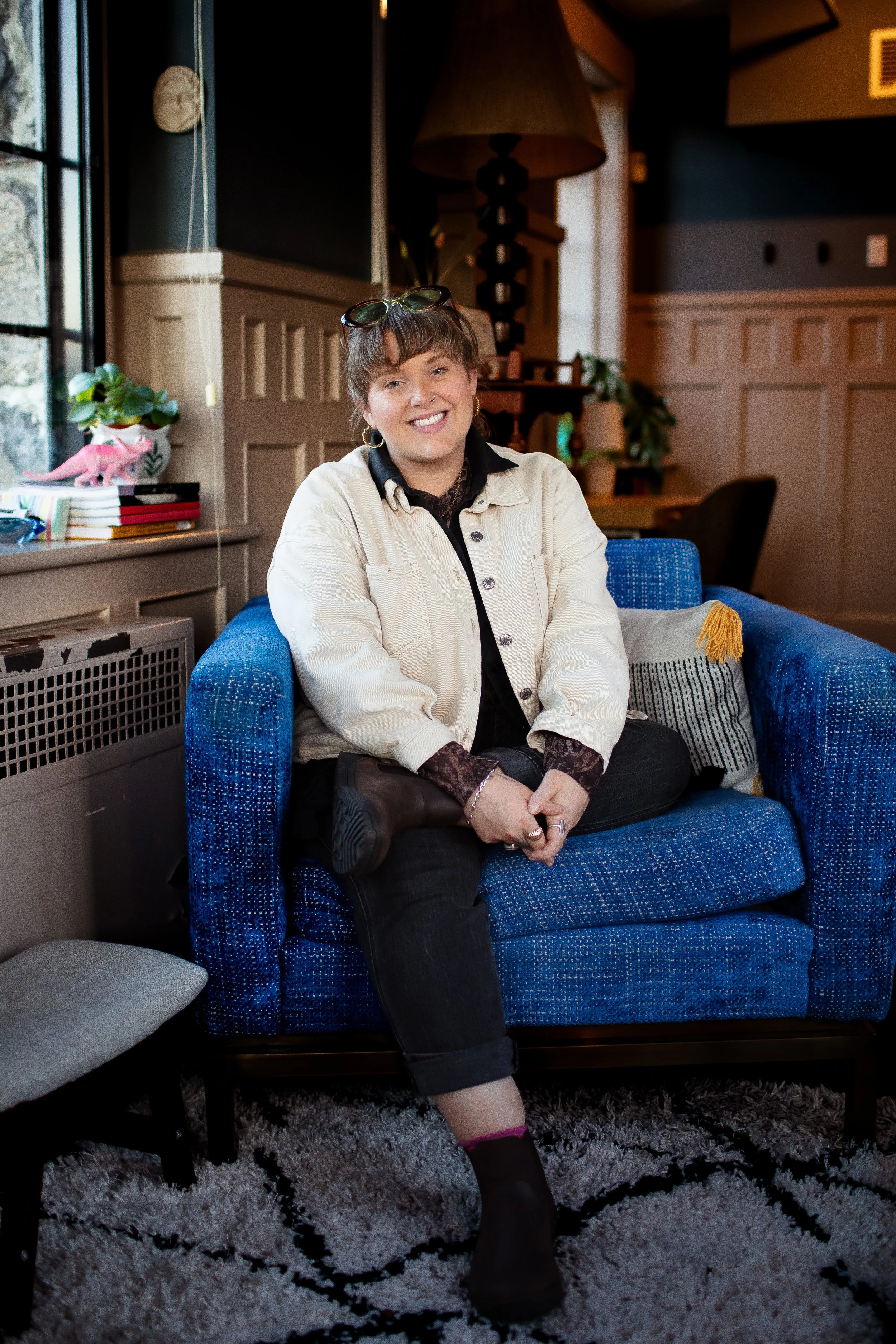
Caroline Wilson, LCSW
Learn more about Caroline here.