Sex!... wait, did I do my laundry?
Sometimes the problem isn’t “I don’t want sex.” Sometimes it’s “My brain and body are not in a state where sex feels accessible right now.”"
by Indya Marković
In college, sex was novel and fun and, honestly, I may have been a little sex-crazed. Sex was an escape from loneliness, school, work, and all my other stresses. It was experimental, messy, adventurous, and often with different people. I wasn’t “tied down” to a partner and was living my true free-spirited life.
But you know what? Sex while in a relationship was different. At first, it was hot and exploratory and spontaneous. Yet once I got comfortable, I found I no longer craved it. Then the longer time went on, the more I forgot about it. And then came the guilt. I no longer wanted sex. I thought something was wrong with me. I thought I wasn’t attracted to my partner.
With my ex, I even went so far as to get tested and start using testosterone cream… as a 23-year-old! Now, I’m not against this, but for me, that wasn’t the true issue.
My ex isn’t exactly the best example, for reasons I don’t need to explain here. But here I am in a new, healthier relationship, and the same thing has happened. I think, “What’s wrong with me?!”
I never considered that my ADHD could be part of the reason. ADHD can impact our sex lives in ways that aren’t always obvious, and it can look very different from person to person. Let’s unpack it.
Novelty, impulsivity, and sex
Sex for people with ADHD can be either the greatest thing ever or the biggest chore. There may have been a time in your life when you were a horny bunny, humping your way around, or you may be in a period where you completely forget what sex is, much less want to be doing it.
ADHD is associated with differences in sexual behavior, including earlier sexual experiences, more sexual partners, and greater sexual impulsivity. You may be curious, impulsive, and have a harder time setting boundaries, which can lead to more sexual interactions and, sometimes, risky sex, emotional emptiness, or unsafe situations.
You may also use sex to self-soothe, seek validation, regulate your emotions, or feel connected. Low self-esteem and a lack of meaningful connection can also play into seeking sexual relationships.
I can say that I have experienced all these things. I have used sex when I was lonely, bored, sad, insecure, curious, and more.
Shame, emotions, and relationships
Self-blame and shame can be especially intense for people with ADHD, and this can show up in our sexual relationships, too. You may blame yourself for a lack of intimacy or mismatched desires. You may feel ashamed for your sexual history or your sexual fantasies. You may have perceived having less sex as a confirmation to your failing in the relationship(s) or your body.
Emotional dysregulation can also affect relationship satisfaction, which can then affect sexual desire. And we may deal with shame about our performance or our bodies that feels even more intense when rejection sensitivity gets involved.
Learning about ADHD helped me understand—and eventually let go of—so much of the shame I carried about my sex life from an early age.
Executive dysfunction, distraction, and sensory issues
ADHD affects executive function, and that can show up in our sex lives in a lot of different ways. We may struggle to stay present during intimacy because our brains are somewhere else entirely.
The dishes. The laundry. The email we forgot to send. The thing we must do tomorrow. The list goes on.
These things not only overwhelm us and keep our brains busy, but they also lead to overall exhaustion that doesn’t leave room for us to lean into sensuality.
And then there are sensory issues. Sensory sensitivity is a major thing for me. You may be sensitive to things like lights, sounds, touch, certain sensations, bodily fluids, smells, or textures. Those things can be a very effective way to get you out of the experience and straight into your head.
Sometimes the problem isn’t “I don’t want sex.” Sometimes it’s “My brain and body are not in a state where sex feels accessible right now.”
That distinction was huge for me.
So, what do we do with this information?
Context matters. If you know you can’t get into a sexy mood with the dishes not done, the big lights on, and the dog barking… then don’t! We can curate our environments to ease our sensory sensitivities. Maybe spend the day cleaning, board the dog for the evening, dim the lights and pamper yourself with an everything shower.
Create transitions into intimacy. Much like our context, transitioning into a sensual mindset is just as important. Many people with ADHD struggle with transitions from task to task, so to creating buffer activities for you and/or partner(s). You can take a bath together, play a fun game, home cook a meal, dim the lights, intentionally unplug from devices, etc.
Communicate your needs to your partner. Tell them how much hygiene matters to you. Let them know if certain types of touch, speeds, or areas are uncomfortable. Tell them what context you need and what you like. Foreplay, hellooo. Explain what mental load is and have them take on some of your to-do list. (Is anything sexier?!)
Introduce novelty. Explore new ways to connect and have fun. You can try changing the environment, try new sex positions or toys, role play, play a game, etc. Personally, when sex gets monotonous, I lose all interest!
It’s okay if you don’t want to have sex! Seriously. You don’t owe anyone sex, including a partner. But if a difference in desire is causing frustration for you or your relationship(s), experiment with some of these things. You might even try scheduling intimacy. I don’t necessarily mean scheduling sex every Tuesday (although that works for some people). I mean scheduling the conditions that help you feel connected and open to intimacy: clean the house, send the kids somewhere, pamper yourself, read a steamy book, go on a date, and see what happens.
Let go of the shame. Easier said than done, I know. But I hope this helps normalize some experiences that are more common than we realize. If you’ve engaged in risky sexual behavior, had many sexual partners, started having sex young, or experienced periods of hypersexuality, you are not inherently broken or bad. If you are now averse to sex, you are also not broken! When sex starts feeling like a chore, of course you wouldn’t want to do it!
Our brains are wired to seek novelty, and ADHD can influence how we experience novelty, impulsivity, emotions, and reward. Sex is a normal part of human existence that can be affected by our ADHD, just like all other parts of our lives.
Indya Marković is a Licensed Marriage & Family Associate in our practice and she’s currently seeing individuals, couples, or polycules via telehealth. Learn more and connect with Indya here!
Own your story.
And, of course, please practice safe sex.
My Secret Weapon Against Sexual Shame (by Jamie Brazell)
I believe that trust can be built only when a person has room to be who they are and feel that they are accepted without conditions.
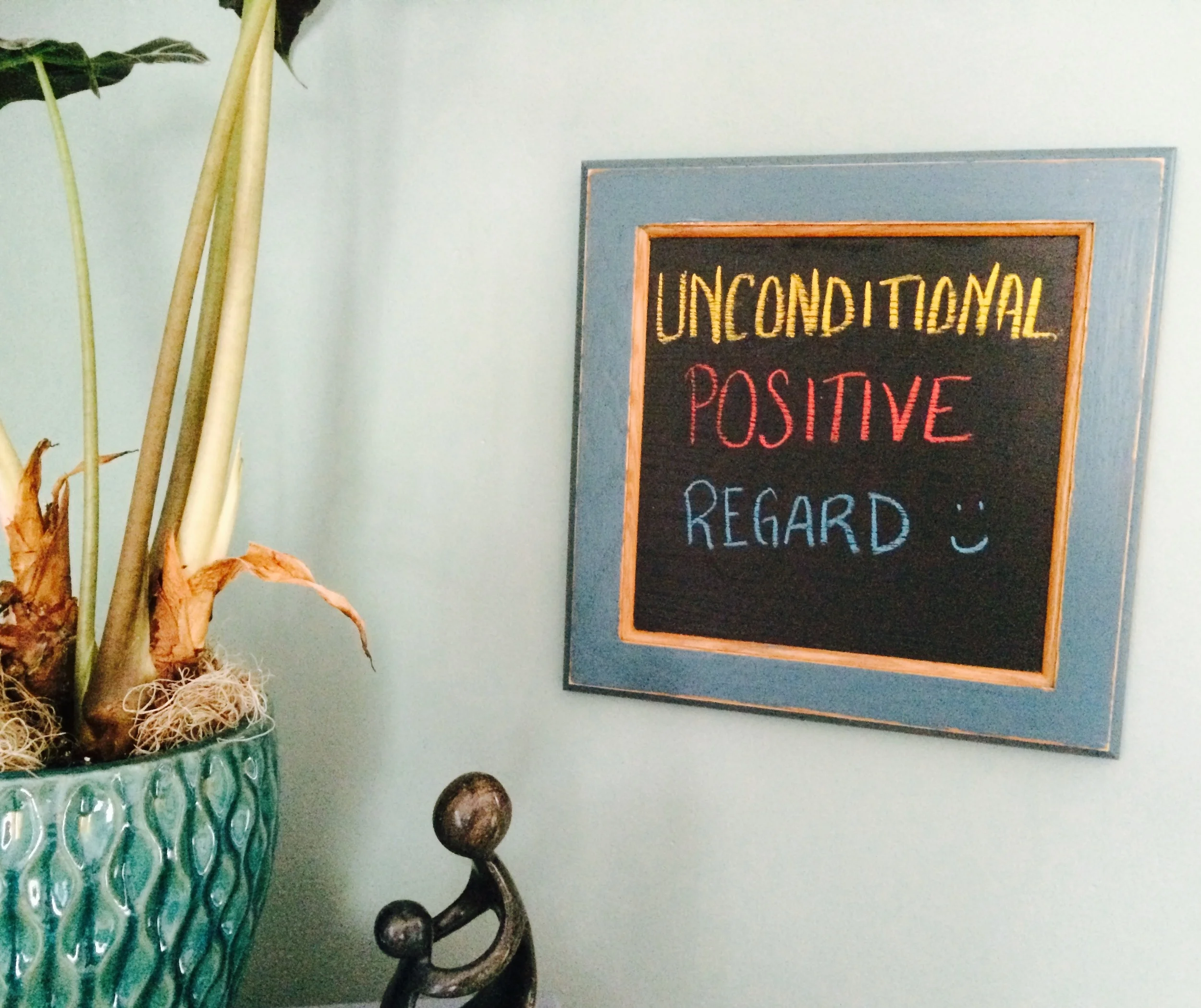
According to Carl Rogers, having unconditional positive regard for every client is essential to the effectiveness of the therapeutic relationship.
As a therapist trained in human sexuality, I tend to have a lot of interesting conversations about sex. I’m not just talking about with my clients, of course, because I have plenty of people in my life who want to engage me in discussions about sex and sexuality. (And yes, I can be a lot of fun at parties).
Sex is an interesting topic that is often incredibly personal - so I feel honored that people feel comfortable talking with me about their own sexual stuff.
From these various conversations, the number one underlying issue that I see when it comes to sexual issues or concerns involves a powerful force known as shame.
Think about shame as this invisible assailant who can overwhelm a person to the point where they feel shut down or unable to take action. It can be devastating. Guilt, on the other hand, which is often confused with shame, will cause a person to take action out of this sense of feeling bad and wanting to make amends of some sort. Guilt is more of an action-oriented force while shame will make a person want to hide under the covers and hope nobody notices.
Here are some ways I’ve encountered
sexual shame in others:
Internalized Homophobia - One of the most heartbreaking statements I’ve ever heard someone say was, “I am an abomination.” And they really believed it at the time.
Underlying questions of: Am I okay? or Is this okay? about sexual behaviors- for example, “I get turned on by this particular kink…but I think it’s really weird.”
Sexual abuse survivors often (not always, but often) express a variety of shame-based feelings.
Statements like, “My body isn’t performing as it should and therefore I’m not man-enough (or woman-enough or person-enough); I’m somehow broken and it’s all my fault.”
Slut-Shaming - “If I tell my partner (or anyone) the truth about my sexual history, they won’t accept me and they’ll think I’m a total slut.”
Sexual shame is particularly powerful because it tends to rob people of accepting sexual pleasure. It can create inhibition, insecurities, or isolation. It can convince someone that the sexual abuse they experienced was somehow their fault. It can convince a person that they are fundamentally flawed because they were taught that their desires are wrong. It can impact relationships and cause great divides between people.
Because shame causes us to hide, it can be especially challenging for a person to communicate these feelings or parts of themselves. Think about how destructive that can be for relationships - because when there is no communication, the only thing people have to operate on is their imaginations. While it’s very typical (and probably an inherent biological survival function) for humans to create assumptions, imagine what would happen if we only operated on our assumptions.
I believe that the first step in overcoming shame is to realize what it is, where it comes from, and how it is causing destruction on the self and relationships. Identifying that the shame is impeding the healing process can help to unblock movement towards goals. Overcoming shame almost always involves some form of self-acceptance. This can be challenging because it can involve undoing years of negative self-talk that may be based on repetitive messages a person has heard from their families, their communities, or other various cultural associations.
It takes so much courage to fight shame of any kind, but sexual shame is a particularly challenging force because it is so deeply personal and because it can often stay hidden unless we decide to take the risk of reaching out. It can take an immense amount of trust to talk about issues involving sexual shame. I believe that trust can be built only when a person has room to be who they are and feel that they are accepted without conditions. And from earning that trust, my hope is that I can help people to overcome that shame and put it to rest for good.
My secret weapon against sexual shame involves earning trust by offering what Carl Rogers referred to as unconditional positive regard. Trust is not always easily earned nor easy to give in every situation. The entire time I’ve been writing this, for example, I’ve been thinking about whether or not I believe there are exceptions to fighting shame. I considered the people who experience shame as a result of having done something very harmful towards someone else (such as a perpetrator of sexual violence). My thoughts on this are that it would still be beneficial to fight the shame and turn it into something else - something healing. Societally, we need to do a better job of addressing and treating sexual shame of that nature, too, so that people may receive better treatment options and increase potential for prevention of sexual abuse.