
Meet Amanda Stem, LCSWA, LCASA (by Jamie Brazell)
Our newest therapist, Amanda Stem!
I am very excited to introduce Amanda Stem, LCSWA, LCASA (she/her), our newest therapist!

Amanda in the wild
(Girona, Spain)
Amanda has come to us with incredible experience working with vulnerable populations and brings humanity and heart to her connections. She has a passion for providing care for folx needing perinatal care and offers a touching and beautiful perspective in her approach that you can read about here.
My experience of Amanda is that she is warm, kind, bright, and energetic. She has a genuineness about her that I find refreshing and being in her presence (even through a screen) makes me feel at ease.
Amanda was described by people who were more familiar with her work in similar terms that matched my experience with her, but also I had been told multiple times that she is “very receptive to feedback.” This might not sound like a big deal to some people, but I find it to be a very valuable quality that stands out.
We want therapists on our team who reflect values of integrity, empathy, and accountability. Someone who is open and receptive to feedback is someone I am excited to know. Empathy and accountability are pathways to healthy relationships and being open to feedback means that a person has the ego strength to show up for their relationships in a meaningful and healthy way.
Amanda is currently able to accept BCBS and is in the process of becoming contracted with Aetna. She is also available to see private pay clients and can offer a statement for insurance reimbursement for those with out-of-network benefits. We will be setting up Amanda’s online schedule system within the next week.
Send Amanda an email here or (if you hadn’t already) click here to read more about her in her own words.

Meet Caroline Wilson, LCSWA (by Jamie Brazell)
I am thrilled to introduce Caroline and welcome her with (socially-distanced) open arms to Out of the Woods Therapy.
I am thrilled to introduce Caroline and welcome her with (socially-distanced) open arms to Out of the Woods Therapy!
It is clear from the way that she writes and the way that she speaks that Caroline is incredibly bright. In the hours that I have already spent with her over the phone and over Zoom, I get the sense that she has many forms of intelligence - the book smart kind, the social kind, and definitely the kind of intelligence that therapists need most (the emotional kind).
I have felt like I could talk to Caroline for hours quite easily. In my opinion (and this is also validated by research), one of the most critical components of therapy is the therapeutic relationship itself. It is essential for clients to feel that they can be comfortable bringing up anything to their therapist. Caroline offers what she and I have come to call a “start to safety” when forming a therapeutic alliance.
Caroline demonstrates the kind of radically inclusive, intersectional-feminist values that are so very important to me and to our practice at Out of the Woods Therapy. People throw around words like “authentic” a whole lot, but I can think of no better word to describe how she shows up. She’s just so….herself. And I believe that inspires others to have the ability to show up confidently as themselves.

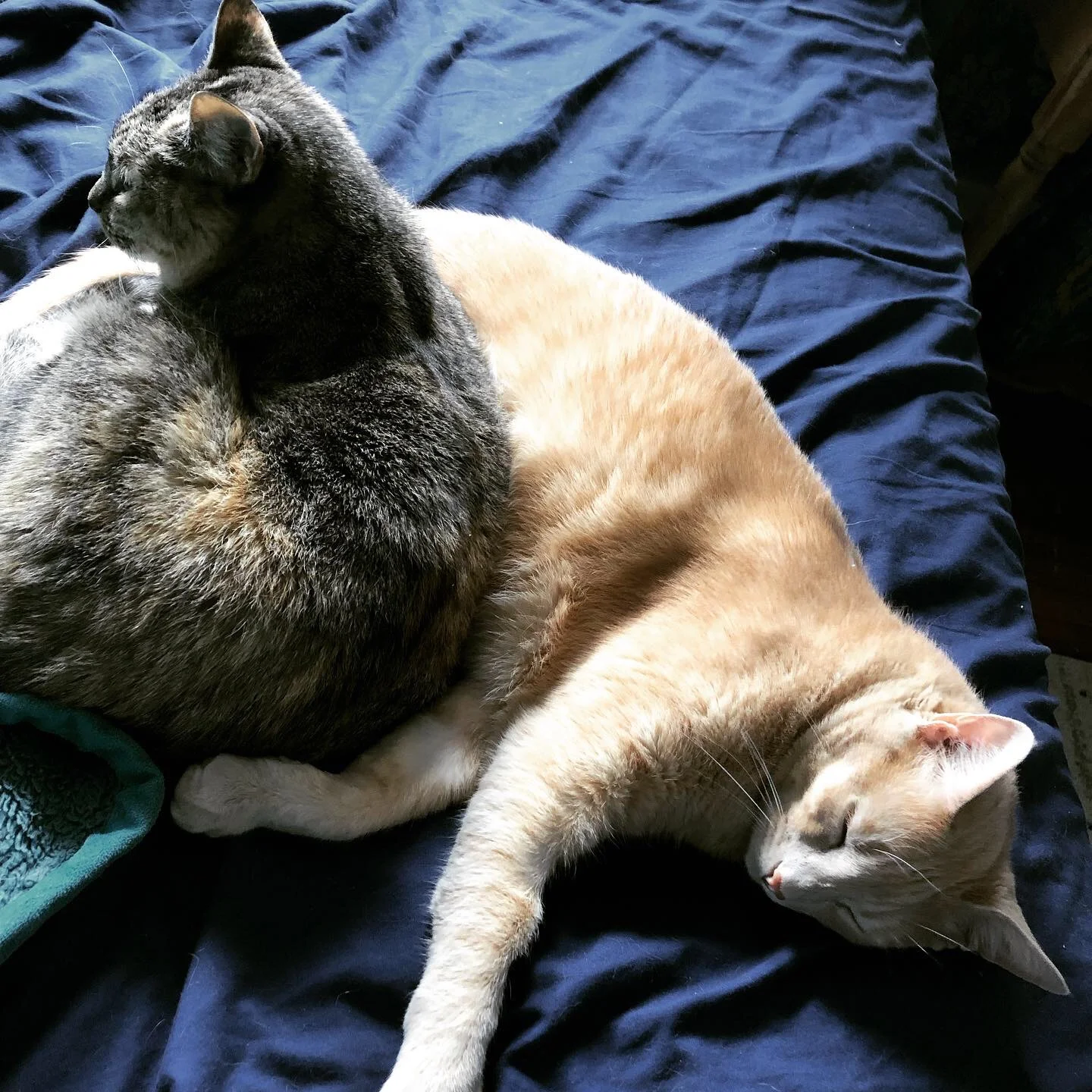
Caroline and Fox, one of her favorite felines
We are working to have Caroline credentialed with BCBS and Aetna. In the meantime, she is available to see private pay clients and can offer a statement for insurance reimbursement for those with out-of-network benefits. It is easy to submit an appointment request by looking at Caroline’s calendar here. You may also email her here.
To read more about Caroline in her own words, please see our about page.

Behind the scenes of a growing practice (by Jamie Brazell)
What being a good boss means to me is to lead with my values of empathy and viewing vulnerability as a strength rather than a weakness.
It feels exciting to have some good news - and also a bit strange because I think we are all so used to bad or scary news these days. I have noticed myself hesitating when something great is happening in my personal or professional life, waiting for the right time to make any kind of happy announcement. And then I remembered that most of us are also really needing to hear something positive right now. So here it is…
I have started hiring therapists to work with me through Out of the Woods Therapy!
The decision to grow my practice came out of several places. Mostly:
I was tired of telling people, “No, I can’t take new clients.”
It is an incredible honor to receive referrals from various members of the community or to receive an email from someone who wants to work with me. I do have referral options, but often those options are also full.
The need for sex-positive therapy is overwhelmingly high. Most of my colleagues who specialize in this type of work are consistently full.
I really want to be a good boss. This is how I introduced myself when I was in a Zoom class with Mountain Bizworks earlier in the fall: “I’ve had a ton of shitty bosses in my life. I really want to be a good boss.”
What being a good boss means to me is to lead with my values of empathy and viewing vulnerability as a strength rather than a weakness. It means that I desire to create an environment that is nurturing, supportive, and encouraging. I’m still doing my best to be a smart business person in the process of creating this dream - but I reject the idea that being in a position of power automatically means that you treat people as if they are less than human.
And truth be told - I fully recognize that all of the time and energy I have spent on growing this practice has been a healthy coping mechanism for dealing with the burnout I was feeling from the pandemic and the overall state of the world.
So what do I consider most when hiring therapists?
I think about a lot of things, but mainly I am paying attention to whether or not I can affirmatively answer the following two questions:
Can I imagine my current clients liking this person? (This is not because I intend on passing anyone on my caseload to a new person, but rather because I value their opinions).
If I were not hiring this person, would I want to see them for therapy?
Those questions, combined with other practical considerations, are what have driven me to select the folks who will be working for Out of the Woods Therapy. I am so excited to introduce each one of them as they become ready to see clients. We are all doing tele-health for now until it is once again safe to resume in-person sessions.
This has been a big, personal post. I am following it immediately with another blog post to officially introduce Caroline because she deserves her own spotlight.
Thanks for reading!
on accountability and repair (by Jamie Brazell)
There can be no repair in a relationship without accountability.
I went to a workshop a couple of years ago that was facilitated by Terry Real, author and therapist who has a particular expertise around working with relational conflict. Real was recalling a moment when he was asked about the prevalence of family dysfunction in our culture. I’ll never forget Real saying that he absolutely believes that we have a high rate of family dysfunction in our culture - and not just because he is immersed in helping people in conflict, but because our society adheres to patriarchal values. He explained that under patriarchal rule, “anything that is deemed ‘the feminine’ is idealized in theory, but devalued in reality - and this very much includes talking openly about our feelings with one another.”
If we can’t talk about our feelings openly with one another, how can we get to a place of repair?
There can be no repair in a relationship without accountability. This is a shared responsibility and is one of the most important components of a healthy relationship. During the workshop, Terry Real discussed how all relationships cycle through moments of connection, disruption, and reconnection. When disruption leads to conflict, repair is necessary in order to restore connection.
How we handle conflict has to do with a number of factors - including what we learned from our families, from our cultures or subcultures, from society at large, and from our lived experiences of mistakes and triumphs in relationships. How we handle conflict can depend largely on how much power we feel we have (or don’t have) in a relationship. If we are oppressed or emboldened. If we are in a position of power, but not aware of our privileges. How much empathy we can access. If we have an awareness of our emotions and can access the underlying needs informed by our feelings. This all matters.
Our capacity for accountability depends largely on our ego strength. As Terry Real discussed further in the workshop - we tend to either go further up into grandiosity or down into shame when we are in a defensive place. It is normal to attempt to protect the ego when in conflict, but we cannot resolve the conflict unless we are in a state of emotional regulation. This includes ability to tolerate discomfort when hearing about someone else’s feelings that we have hurt. It also involves demonstrating the ability to accept feedback while resisting the urge to fall into a state of shame. Additionally, we are not being accountable to our own selves when we refrain from talking about our internal experiences with one another. It is not just important to talk about those feelings, but it also matters how we deliver and express our emotions.
There’s a good chance you weren’t taught any of these skills in your family. There’s a good chance that you weren’t taught about it in other groups you’ve been a part of since you were young. Many of us are still developing and healing from what we didn’t get or got too much of in childhood. I believe this is a life-long process that is worth it to explore because doing so adds richness to all of our relationships - including the very important relationship we have with ourselves.
Something crucial to pay attention to (for oneself and others) is whether or not someone is NEVER willing to take any responsibility for wrongdoings. It’s also important to notice if there is someone who is ALWAYS taking the responsibility. While I don’t think it’s necessarily wise to keep score - because even though we’re all imperfect beings, it generally becomes destructive and builds resentment if we hold grudges and resentment by keeping score - it is, however, important that there is some sense of balance when it comes to accountability. If there is a situation where someone never assumes responsibility, but instead places all responsibility on the other person, this raises a red flag and can be a sign of emotional abuse.
How I imagine repair isn’t always the way it turns out - of course. There are some relationships in which it is far easier to practice this than others. In my own life, I find more ease in holding accountability in a healthy manner with clients, friends, and with my child. Close romantic partnerships can more easily bring up defense mechanisms for me. The awareness of how I’m feeling and the reminder that I do not need to protect my ego so fiercely has made it so that I am able to catch the defensiveness and lean in to the repair without either taking on too much responsibility or not enough.
How I handle conflict - on both the side of being hurt and on the side of hurting someone else - means more & more to me in all of my relationships. It means something to me because I think that relationships are the most important connections we have in life. They keep us going and they feel fragile if we don’t know how to handle conflict. Since coming to understand the value of accountability and repair, I no longer tolerate relationships that lack these qualities. I value integrity, empathy, and vulnerability so much that it would feel like a betrayal to myself if I were to remain in a relationship where these values are not respected. This may sound like it’s coming from a place of empowerment (because it is), but remaining firm with these boundaries has not been easy nor has it prevented me from feeling pain. I can say with certainty that since I have actively engaged in getting clear about my values and understanding the components of healthy relationships, I am drawing in more people in my life who are able share times of grief as well as times of joy - qualities I consider as clear markers for a meaningful relationship and create a sense of mutual emotional safety.
For those of you who have been hurt by someone who refuses to demonstrate accountability and repair, may the following words from my favorite self-help book bring you comfort:
“No individual will feel accountable and genuinely remorseful - no matter how well you communicate - if doing so threatens to define him or her in an intolerable way. The other person’s willingness to own up to harmful deeds has nothing to do with how much she or he does or doesn’t love you. Rather, the capacity to take responsibility, feel empathy and remorse, and offer a meaningful apology rests on how much self-love and self-respect that person has available. We don’t have the power to bestow these traits on anyone but ourselves. “ (Harriet Lerner, “Why Won’t You Apologize? Healing Big Betrayals and Everyday Hurts”)
To learn more about the work of Terry Real, check out his webpage here.
This post concludes the blog series I started at the beginning of the year on the subject of healthy relationships. I’m currently working hard on writing a book (about sex!) and therefore will be taking a break from posting blogs for a while. Thanks for reading!

on boundaries (by Jamie Brazell)
Over the past several months, I’ve been writing about qualities of healthy relationships. In prior posts, I’ve explored empathy, vulnerability, and curiosity. This time I’m diving into boundaries - how we communicate what we want and do not want in our relationships.
Over the past several months, I’ve been writing about qualities of healthy relationships. In prior posts, I’ve explored empathy, vulnerability, and curiosity. This time I’m diving into boundaries - how we communicate what we want and do not want in our relationships.
One of my loved ones recently shared the thought that it’s absurd how most of us are taught about boundaries in pre-school and kindergarten, but the lessons usually end there. Could you imagine if you were taught math in kindergarten and then only again for a couple of days over the next several years?
I wish we’d have more lessons that help foster healthy relationships throughout our development for the sake of reinforcement and growth - like communication skills, compassion, boundaries, and comprehensive sex education. I know that there are folks out there who strive to do that kind of work, but there are many systems in place that prevent these changes from happening on a larger scale.
I’m breaking down my thoughts on boundaries in two parts for this post. Part one explores attachment theory and boundaries. Part two includes my response to an anonymous question from a Vino & Vulvas panel event.
part one: boundaries and attachment theory
I love thinking about how boundaries relate to attachment theory - a framework that explores ways humans relate through secure and insecure (anxious, avoidant, or disorganized) attachment styles.
Although we begin development of our attachment styles through experiences with primary caregivers, these styles are fluid rather than fixed. This means that if you started off with a more insecure attachment style, you can (through personal growth work and healing relationships) develop what is called an earned-secure attachment style. It also means that it’s possible to shift into an insecure attachment style if you’ve experienced significant relational stress or trauma.
Attachment style is contextual. You might feel incredibly secure with a best friend, but anxious or avoidant with a romantic partner.
Boundaries can be messy, unclear, and sometimes change so regularly that it can be challenging to keep up. It is best to not assume when it comes to boundaries, but rather to communicate about your own or to ask about someone else’s. (Remember that old saying about assumptions? How they can make an ass out of you and me?)
Your boundaries are likely different in each relationship in the same way that your attachment style differs. In the book, “Coping with Trauma-Related Dissociation,” the authors outline examples of “healthy” versus “unhealthy” boundaries in three different lists.
*A quick suggestion before moving on: It’s tempting to see “healthy/unhealthy” and think “good/bad.” A challenge I’d like to offer is to simply consider them as they are rather than hold judgement. The truth is that we all go to insecure places when we’re stressed. Most people have both healthy and unhealthy coping strategies. The extent at which something is “unhealthy” depends on the person and how problematic this is for them.
When applying attachment theory to the examples from the lists (which you can find here), this is my interpretation:
secure attachment = “healthy” boundaries
anxious attachment = “too lax/collapsed”
avoidant attachment = “rigid”
disorganized attachment = combination of both “unhealthy” lists
A person with a mostly secure attachment style is likely to present with healthier boundaries. A person who is under relational stress or who has endured attachment wounds will present with more qualities on the unhealthy boundaries lists. Again, since attachment styles are fluid rather than fixed, it’s common to see examples that you might relate to in each category. I refer to this list from time to time as a way of re-evaluating how I’m showing up in my relationships. If I’ve noticed that my boundaries have been more on the unhealthy side (anxious attachment style tends to be my go-to under stress), I consider the stressors and reach for strategies to help myself get back to a state of regulation and security.
We all need healing from relational wounds. If you’re finding yourself in more of an insecurely attached place, it can be very helpful to learn more about your attachment style so you can explore ways of better understanding your feelings and needs. I’m including resources at the end of this post that I think are quite helpful.
Part two: boundaries and consent
(content warning: unwanted sexual experiences - head’s up if you’re not in the mood to read about this and also encouragement to do what you need to do to take care of yourself if/when you feel triggered)
During a Vino & Vulvas event, we received an anonymous two-part question that I felt needed more time to answer and thought it would fit well into a blog about boundaries.
This was the first part of the question:
“Please talk about the nuances to consent with regards to partnerships where one person may not have the ability/comfort/sex education to speak their needs. How is that navigated?”
All sorts of things can interfere with our ability to communicate about sex (with power dynamics being at the very top of that list of considerations). I happen to think that just because a person has more experience in terms of numbers of partners or years of sexually engaging activity, it doesn’t mean they have mastered the skills it takes to communicate well in all of their relationships - even though it’s easy to assume otherwise.
If you suspect that you are the partner who has more of an advantage with ability/comfort/sex education, consider how your approach can empower your partner in a way that is fun or pleasant for both of you.
Everyone differs in their ability to communicate clearly for all sorts of reasons and we can’t always guarantee that what we have communicated is interpreted accurately. This presents complications when it comes to advocating for one’s own needs. It also means that we share the responsibility in relationships for how we send and receive information. Reflective listening, asking clarifying questions, and having an attitude of curiosity can go a long way in developing these skills together. It takes practice, patience, and a dedication to creating a culture of good communication in any relationship. It can also be very helpful to learn about attachment theory (as mentioned above) and explore each of your attachment styles to better understand one another.
When I think of comfort, I consider the various ways in which shame and sex are interconnected as a result of omnipresent negative messages about sex. And in terms of education, I’m convinced that most people in our culture haven’t had the sex education that I believe all of us deserve - which includes comprehensive information on pleasure, sexual diversity, and enthusiastic consent in addition to information about STIs and reproductive functioning. This has less to do with ability or disability than it does with overall lack of resources and cultural support around sex education. This type of education can be hard to find, but great resources do exist (see the end of this blog post for some of them).
Ideally, you will feel empowered to communicate with your partner before, during, and after a sexual experience. If you aren’t feeling confident in your knowledge or hold shame about sex, seeking out ways of overcoming those barriers can transform the experiences.
The second question stated:
“To what degree is it a person’s responsibility to say/communicate a “no” and to what degree does the more communicative partner “read them?”
I believe that we share responsibility in our engagement with others, but as I mentioned above, we must consider the power dynamics in any relationship. Many people have been socialized into being deferent towards others (particularly those raised female or other marginalized groups) and this can make saying “no” a challenge. It’s also possible that a person can be fairly assertive in just about every other area of their life until sex enters the equation. If you are the person in the relationship who holds more power in this context, having awareness of what that means and treating your partner with care and respect will go a long way. I can’t stress enough how important it is to be sure that you are getting an enthusiastic YES - especially when it comes to physical engagement with another person.
It certainly helps to communicate about what’s going on for you before engaging sexually with another person. Nobody will ever have the ability to read your mind and it doesn’t matter if you’ve been together for decades. Some people will be better at attuning to your needs than others, but that kind of a rapport takes time to develop and can also change over time. It’s very important to pace sexual experiences to the level of comfort of the person who needs to take things the slowest. I can’t tell you how many times I’ve heard someone say that they feel afraid to speak up about their needs before, during, or after an experience. Some people will bear pain because they are afraid to speak up.
I don’t believe that most people in relationships set out with a desire to cause unwanted harm to their partner. I do believe that people wound each other in relationships in all sorts of ways because that is an unintended consequence of being imperfectly human. In the context of a relationship, the lack of awareness of boundaries, communication of boundaries, or ability to advocate for selves can be very damaging for both people over time.
The nervous system can respond with more options than fight or flight. For many of us (especially survivors of sexual trauma), a freeze response can happen as quickly as any reflex. If you have a sense that you might experience freeze responses in sexual situations, talk about this before you have sex with your partner. You can let them know that this is a thing that happens sometimes and that you might need to either slow down or stop altogether, but that you might not have the words in the moment to ask for what you need. Think about the possible answers to “What I may need for you for support is ________ or _________ if you notice me __________ or ___________” as well as, “You’ll notice that I’m enjoying myself when you see me __________ or hear me ___________.”
I hate that I have to end this with the following words, but I feel that way because I wish it weren’t necessary to say this all of the time. If you have been assaulted or abused in any way, it’s not your fault. For most survivors - myself included - we need to hear that message with a certain amount of frequency in order to combat the internalized shame from enduring these traumatic experiences and from living in a culture where it is often difficult to find empathy or support.
When it comes to the topic of unwanted sexual experiences, we usually hear the wrong questions asked that tend to blame the person who was harmed such as, “what were they wearing?” or “why were they in that place at that time?” or “why didn’t they say no?”
We don’t hear, “why did this person harm that other person?” nearly enough. We don’t adequately focus on understanding why someone thought a no was a yes or why they thought a lack of a yes was a yes. And although I stated that I don’t believe most people in relationships intend to harm their partners, there are plenty of people out there who are being abused by their partners and who are even told they are not allowed to have boundaries. Sometimes people will fear putting up a boundary with a partner because they “don’t want to give them an ultimatum” (which tends to have a negative connotation).
The more we normalize talking about our feelings and needs, understand healthier expressions of boundaries, and work to heal our attachment wounds, the healthier our relationships will feel overall.
The next blog post will address accountability and repair in relationships.
Resources:
sex education:
Drawn to Sex: The Basics by Erika Moen & Matthew Nolan (who also have a website where they review sex toys that you can find here).
Come as you Are by Emily Nagoski - for anyone who has or loves a vulva
local shops in Asheville:
VaVavooom - body-safe adult toys, books, and more
Firestorm Books & Coffee
other resources:
Scarletten website - Don’t be fooled by the fact that this website says it’s for “teens and emerging adults.” Every adult I know is an EMERGING ADULT. I refer to this site (particularly the page that this link brings up) with grown-ass adults all of the time.
Savage Love Podcast - Dan Savage has been in the sex education world since he started his syndicated sex advice column, Savage Love, in 1991. Over the years, so much has changed and evolved - including Dan! So if you’ve ever been offended by him in the past, he’s worth a revisit.
Vino & Vulvas events are now available online if you are unable to attend the in-person monthly panels.
attachment theory:
My friend, Elizabeth Gillette, is an expert on attachment theory. She spends a lot of time thinking, writing, and now podcasting about attachment theory and relational healing which largely informs her approach as a therapist and as a human in general. I find myself resonating a lot with Elizabeth’s work and feel very grateful that I have had opportunities to spend time with her in workshops and in community. I very much encourage diving deeper by checking out Elizabeth’s work. A great post to start with is here. The first blog post she has listed includes a link for a really great attachment quiz.
trauma resources:
The Body Keeps the Score by Bessel van der Kolk - one of the best books written about trauma (in my opinion)
Complex PTSD: From Surviving to Thriving by Pete Walker - for child abuse survivors - emotional, physical/sexual abuse, or neglect
Boundaries list from Coping with Trauma Related Dissociation by Boon, Steele, and van der Hart - for those suffering from trauma-related dissociation.
Lost Connections by Johann Hari - this book normalizes depression and anxiety as parts of the human condition and explores ways in which a variety of disconnections can exacerbate these experiences.
Mindsight: the New Science of Personal Transformation by Daniel Siegel
Pandora’s Project - support and resources for survivors of unwanted sexual experiences and their friends/families
If you struggle with attachment wounds that impact how you operate in relationships or if you hold shame in the area of sex, unpacking these feelings and thoughts with a therapist can be an awesome healing opportunity and a chance for you to deepen your relationship with yourself. If this is not accessible for you at the moment, I recommend looking for community support groups in person or online, utilizing book or website resources, and using free mental health apps. Also bear in mind that talk therapy is often not enough for many survivors of trauma. It’s common to need a multi-disciplinary approach to this type of healing journey. This can mean incorporating additions to talk therapy such as a meditation or yoga practice, Equine therapy, Somatic-experiencing therapy, EMDR (Eye-movement desensitization and reprocessing) therapy, TRE (tension and trauma release exercises), or other healing modalities.
on curiosity and Vino & Vulvas! (by Jamie Brazell)
on curiosity (and Vino & Vulvas)
There’s this group in Asheville that I’ve been involved with for the past few years. It’s called Vino & Vulvas…but don’t be fooled. Despite the fact that the name has both “vino” and “vulvas” in it, nobody is forcing wine on you and it’s not an exclusive club for people who have vulvas.
Vino & Vulvas is for anyone who identifies as curious.
Curiosity, to me, means you want more information and have a willingness to listen with an open mind, ask questions, and allow yourself to wonder about what you’re noticing.
The founder and leader of Vino & Vulvas is Heather Edwards, who is a pelvic physical therapist, sex educator & counselor, and one of my very best friends. When I think of the word curious, Heather magically appears in my mind. And since this blog post is about curiosity and why it’s so important, I figured I’d take a moment to highlight this very curious experience we offer with V&V.
Heather hosts a panel of experts once per month for a discussion on various topics about sex and sexuality. These events are held in a public space (currently UpCountry Brewing) where wine and food are available (if one wishes to partake). Heather uses the term “edu-tainment” to describe the experience she strives for - and the panel discussions often deliver both education and entertainment. Sometimes we are more serious than entertaining in the approach - because there are some important topics about sex that are not exactly fun and games, but very important to discuss.
Vino & Vulvas is not group therapy. In fact, we want the audience to relax and observe without interaction - as if you’re going to a concert or a lecture. We have an hour for panel discussion, a short break, and then there’s an opportunity for folks to ask questions ANONYMOUSLY. We’ve learned from past experiences that things don’t often go well when people are shouting their questions to the panel. Having anonymous question cards offers a chance to ask a curious question without outing yourself and risking a vulnerability hangover.
Find out more and sign up for our mailing list here. We sell tickets online ahead of time and they have been selling out. Asheville is quite a curious community.
One reason I thought of highlighting V&V with curiosity is because I remember a moment on one of our panel discussions when Heather was talking about how to keep long term relationships exciting. She talked about how she likes to imagine her partner as an endlessly explorable island - acknowledging that no matter what, none of us can ever completely know anyone…and isn’t it more exciting to embrace curiosity rather than assume the same-old-same-old?
It’s easy to take people for granted when you see them all of the time. It’s even easier when that person is a long term partner. It seems as if the closer we are as humans, the easier it is to forget about curiosity in our relationships.
I believe that invoking curiosity can be a remedy for disconnection. If you are coming from a place of curiosity, you are reserving judgement. You are not taking everything so personally. You are able to tolerate whatever discomfort you might be having in your own experience of someone or something and ask questions.
This works well even if you don’t have a partner. Consider your relationship with yourSELF. Are you judging yourself harshly, with shame, and maybe even berating yourself? Or are you in a place of wonder about yourself?
I know it can be hard to tame our inner or outer critic and sometimes feels impossible - especially if you’ve been taught to dismiss or fear your own feelings or those of others. It can be helpful to practice this on your own by noticing how you’re feeling and intentionally shifting to a curious place about why you might be feeling that way. If the judgement is too harsh, try imagining that you are someone you love wholeheartedly (a child, a pet, a friend, a partner) and they are reporting these feelings to you. And if that’s too hard, try exercising curiosity with things that aren’t intensely emotionally charged first.
When you are in curiosity with another person, use the approach to ask questions and learn more directly from that other person…rather than tell yourself stories that may or may not be accurate. (We are ALL guilty of telling ourselves stories about the actions or behaviors of other people - and sometimes we’re right, but we’ll never know unless we ask questions).
Curiosity builds empathy and leads to increased emotional safety - which is one of the most precious things in any relationship.
Does being in curiosity mean that you have to tolerate all sorts of behavior in all of your relationships? Hell, no! The next post will address the importance of boundaries.
Thanks for reading. See you at V&V…

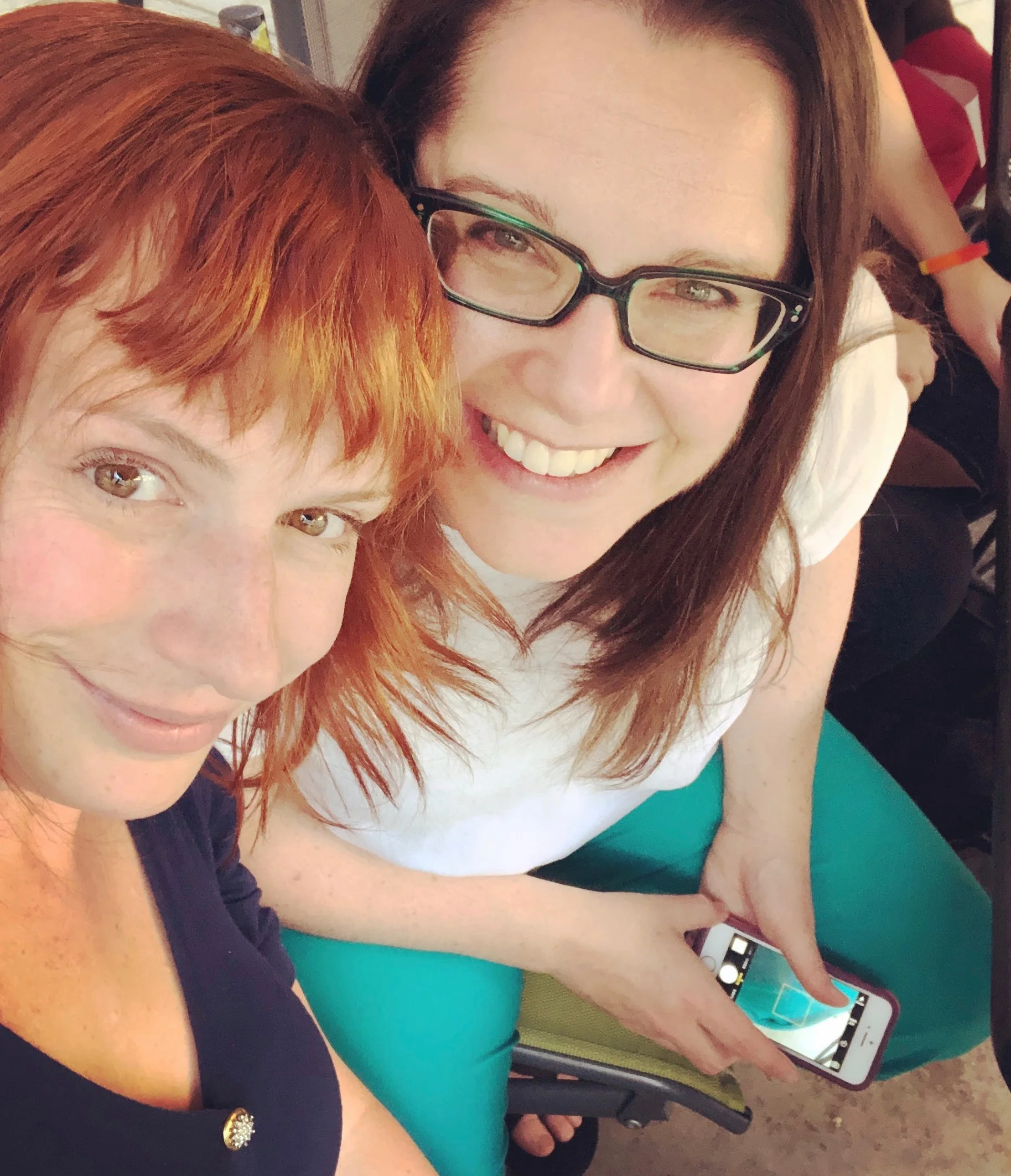
me & Heather at the AASECT conference in Denver 2017
Thank you for crying: a post about vulnerability (by Jamie Brazell)
I believe that crying is one of the most vulnerable emotional expressions out there and that it is courageous.

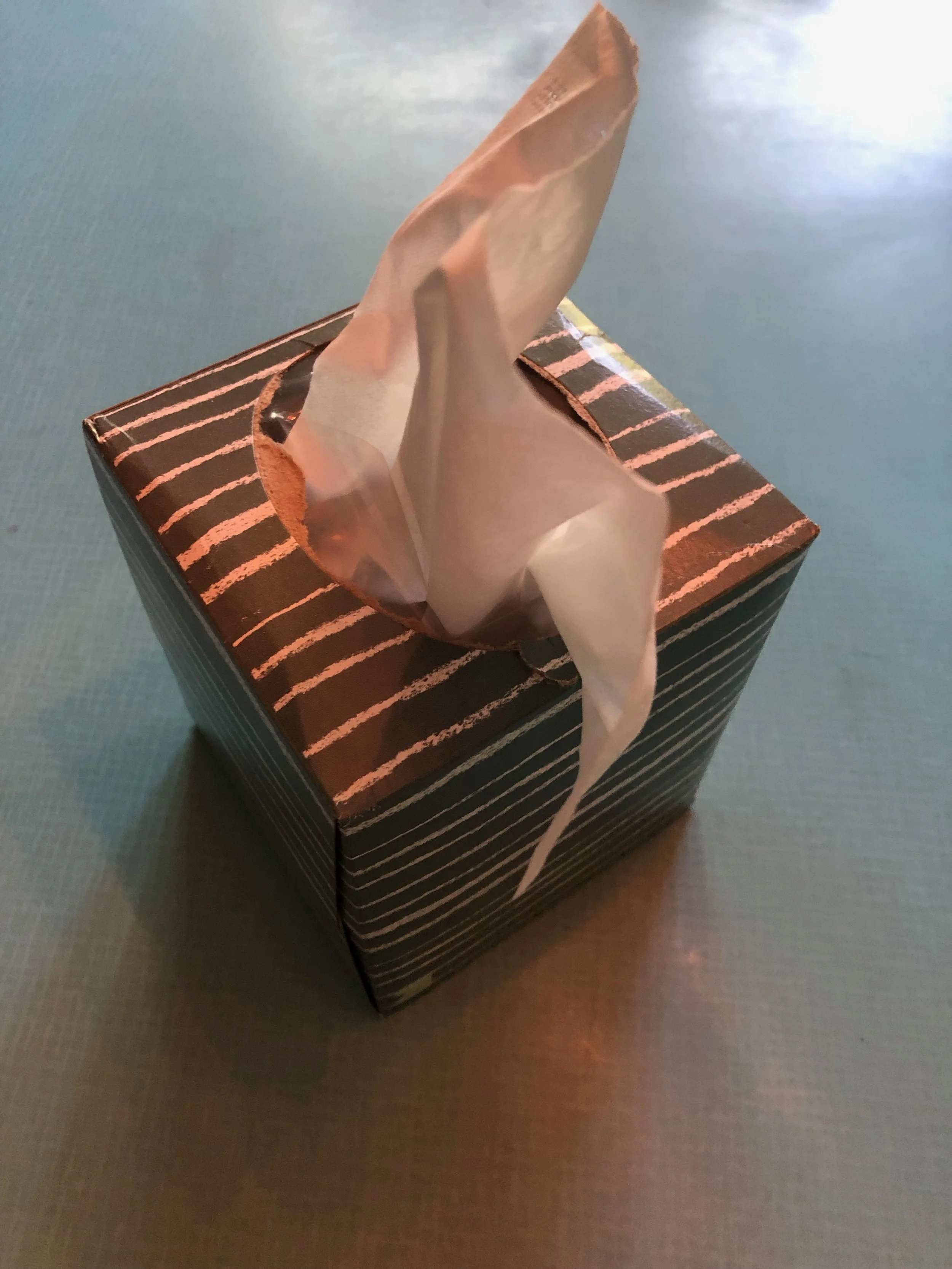
There are plenty of tissues to go around in my world.
I had this reputation at the clinic where I practiced as a student therapist…
I was The Cryer.
When I learned that other students were calling me this, I felt immediate shame. As a therapist or as someone in a helping role with other humans, I’m not supposed to cry.
That last statement is total bullshit.
Admittedly, I became somewhat defensive about being known as “The Cryer.” I was quick to point out (a little desperately) that it wasn’t the kind of crying that stops the room and doesn’t turn into sobbing, but rather just some tearing up in the corners of my eyes. I wanted to convince these other students that I’m a good enough therapist.
I realized - eventually - that I didn’t need their approval. All that really mattered was the relationship I had with each client I saw in the therapy room.
I thought I had made peace with my tendency to cry many years prior to this, when I was training to become a rape crisis counselor in 2002 back in New Jersey (yes, The Garden State). During a class, we were shown a graphic rape scene from “The Accused,” a film starring Jodie Foster. I had to leave the room, feeling triggered and emotional. In this situation, I was actually sobbing and expressed concern to the trainer that I wasn’t cut out for this work.
“What if I cry in front of a survivor?” I asked, through heavy tears.
“So what if you do?” she said. “There’s nothing wrong with crying. As long as it doesn’t turn into a situation where THEY are taking care of YOU, I don’t see a problem with showing that you’re having an emotional reaction. You’re a human.”
At that moment, I felt like I had been given permission to have emotions and to accept them. Sometimes the more you fear something, the more it shows up in your face; feelings can be especially tricky in this way.
Many people apologize when they start crying - even when they’re in therapy. The words, “I’m sorry,” come out so quickly, like a reflex, as soon as the tears begin. I know enough to understand that respond with, “Why are you apologizing?” that I might get a sideways glance that says: “Duh! I’m crying…and that’s unacceptable.”
So I typically respond by gently reminding them that it’s ok to cry - especially with me.
I believe that crying is one of the most vulnerable emotional expressions out there and that it is courageous.
I’ve always been the type of person who wears her heart on her sleeve and had been taught most of my life that this is a weakness. I’ve been prone to vulnerability hangovers because I tend to over-share in social situations out of excitement and a deep desire to connect. But when it comes down to it, really, I have learned that vulnerability is one of the things I value most in this world and I am learning more and more to embrace it.
I like being the type of person who runs towards emotions rather than retreat. And since accepting these things about myself, I’ve become more skilled at determining who has earned the gift of me sharing my vulnerabilities and better at pacing the sharing of personal information.
We can deepen our relationships (including the relationship we have with ourselves) by embracing vulnerability. If we learn to value vulnerability more, we become better at recognizing when it’s coming up and choose to treat ourselves and others with care and respect rather than use the vulnerability as a weapon. This practice leads to trust and emotional safety - which is one of the most important components of any healthy relationship.
If you find that you are reluctant to share with others, it might be a good idea to contemplate reasons why you’re feeling that way. If a person has repeatedly expressed poor reactions to your emotions, it’s very hard to feel emotionally safe with that person. If you’ve had poor reactions to your own emotions, it can become increasingly difficult to share them with others.
Brené Brown (shame researcher and author I mentioned in my last blog post) has a lot to say about vulnerability. She addresses myths behind vulnerability and uncovers the truth that expressing vulnerability is actually an act of bravery rather than an indication of weakness. Do yourself a favor and watch her latest Netflix special: “Brené Brown: A Call to Courage.” You (most likely) won’t regret it.
The next post will be about curiosity and its important role in building healthy relationships.
Thanks for reading. :)

empathy is one of my favorite things (by Jamie Brazell)
This blog post is dedicated to both Brené Brown - who inspires me in many ways - and to my internal rebellious teen - who has fought very hard to learn how to love herself and build shame resilience.
I have this rebellious teenager who lives inside of me. When I picture her, she is sort of stuck in the 90’s. She’s a little goth or “alternative,” but don’t tell her that (and whatever you do, please don’t call her “artsy” either).
This internal rebellious teen is not a fan of things that are too trendy.
society: This thing here is ALL THE RAGE.
her: (rolling eyes) Well it must suck.
She is likely the part of me who is responsible for the post I had made a few years ago that talked about how it’s ok to feel ungrateful sometimes (because this was right around Thanksgiving time and I was seeing posts about gratitude all over the place).

15 year old me
Back when I was starting my private practice, it seemed like Brené Brown (who is best known for her research on shame) was all the rage. I could not escape an interaction with a therapist friend without a Brené Brown quote or reference. My internal rebellious teen dug her heels in. “Nope. We don’t care about what’s trendy.”
Somehow (maybe through Faceook), I was exposed to a Brené Brown Ted Talk about shame and felt like I wanted to convert to whatever cult following she seemingly incited. Her work is undeniably phenomenal and I’m really excited to hear that she has a Netflix special coming out next month.
This blog post is dedicated to both Brené Brown - who inspires me in many ways - and to my internal rebellious teen - who has fought very hard to learn how to love herself and build shame resilience.
Believe it or not, I’ve been writing this for weeks. In addition to the hours of time I spend with my beloved clients (and that’s not sarcasm - I am incredibly lucky to love my work and the people who honor me with sharing their stories), the hours of mom-ing, and all the time I invest each week with various relationships in my personal life, I have been stealing time here and there to dump out my feelings and thoughts for this post. I’ve also been going through a fascinating process of reading old journals (the ones that I hadn’t burned), piecing together the bones of what will hopefully become my first published book, and reading five different books. So I’m not being too hard on myself for spacing blog posts farther apart than I’d originally intended (promise I’m not being too hard on myself).
This post is about empathy. And again, thanks to Brené, I have come to the realization that empathy is one of my top two priority values. (The other one is vulnerability - go figure).
I recently joined a small book club in my neighborhood that consists of all therapists. Our first reading assignment was Brené Brown’s “Dare to Lead.” Since finishing it, I can’t stop talking about it - especially parts that relate to the importance of empathy.
According to Brené, empathy is not about relating to an experience of another person, but rather it is being able to identify the underlying emotions attached to the other person’s experience. It is a skill and a practice - which means that it can be developed and it also is not something that anyone gets perfectly every time.
Empathy is an incredibly important skill to me as a therapist, a mom, a partner, a friend, and just about any relational role I can think of that requires me to show up with my humanity.
Interactions that lack empathy activate my nervous system in a way that alerts me that something is wrong. Sometimes it can take a while to figure out the source of the problem, but I can feel something is off because it’s difficult to self-soothe.
If we’re stressed or triggered, we will struggle to physiologically calm down until we feel understood. And when we’re in relational conflict and both people are triggered, it can feel nearly impossible to get to that place of understanding when both people are deep in their defense mechanisms.
Empathy requires differentiation. I am me and you are you and although we’re not the same, we’re both human. We need to respect our differences and honor them as much as we do our similarities. We can’t expect a partner or a friend to have the same reaction as we do with a given situation - so if we have an understanding of who they are and how they feel, we are able to actually see them.
Empathy requires the willingness to connect. It is an essential part of healthy relationships because the more you share empathy with someone and empathy is reciprocated, the more emotional safety you will feel in this relationship.
Empathy requires humility and risk taking. This means guessing, at times, but with the willingness to be wrong because you realize that you’re not the expert on the other person’s experience. You are merely tapping into what you think they might be feeling…so please ask away and don’t expect to be right every time. (I do this often as a therapist, a partner, a friend, a parent, etc.)
Empathy requires us to have access to all of our feelings. And you can’t have access to all of the feelings if you’re in defensiveness. You need to be able to tolerate your own discomfort or anxiety in order to use your empathy skills. We can say that we need a moment (or moments) when we’re not able to show up for someone. To shut down and walk away without acknowledging our need to take a moment can feel like abandonment on both sides.
As Brené explains, there’s a common phrase known as “empathy failure” that she reframes as an “empathy miss” because the word failure feels too harsh in most situations and connotes that there’s a way to do this perfectly. It’s so helpful to know that you can screw this up and try again. One of my favorite parts of “Dare to Lead” is an example described in which Brené and her team require participants at empathy workshops to sign a document that states, “I agree to practice empathy, screw it up, circle back, clean it up, and try again.”
In the following paragraph, she states, “You have no idea what it means to someone when you can say, ‘You shared something hard with me and I didn’t show up the way you needed me to. I care about you and what you shared. Can I try again?”
It can take a tremendous amount of ego strength to do this, but I can attest to how powerful this is from both sides of the situation. I believe it’s worth the risk even if it feels terrifying to practice this because it offers an opportunity to deepen connection.
Empathy requires my other favorite value, vulnerability - which will be the topic of the next blog post (and I’m sure Brené will come up again).
Here’s a 3 minute video that describes the difference between empathy and sympathy (in case you’re wondering), narrated by Brené Brown. https://www.youtube.com/watch?v=1Evwgu369Jw
For more information about Brené Brown’s work, check out her website here.
Thanks for reading.