
Meet Amanda Stem, LCSWA, LCASA (by Jamie Brazell)
Our newest therapist, Amanda Stem!
I am very excited to introduce Amanda Stem, LCSWA, LCASA (she/her), our newest therapist!

Amanda in the wild
(Girona, Spain)
Amanda has come to us with incredible experience working with vulnerable populations and brings humanity and heart to her connections. She has a passion for providing care for folx needing perinatal care and offers a touching and beautiful perspective in her approach that you can read about here.
My experience of Amanda is that she is warm, kind, bright, and energetic. She has a genuineness about her that I find refreshing and being in her presence (even through a screen) makes me feel at ease.
Amanda was described by people who were more familiar with her work in similar terms that matched my experience with her, but also I had been told multiple times that she is “very receptive to feedback.” This might not sound like a big deal to some people, but I find it to be a very valuable quality that stands out.
We want therapists on our team who reflect values of integrity, empathy, and accountability. Someone who is open and receptive to feedback is someone I am excited to know. Empathy and accountability are pathways to healthy relationships and being open to feedback means that a person has the ego strength to show up for their relationships in a meaningful and healthy way.
Amanda is currently able to accept BCBS and is in the process of becoming contracted with Aetna. She is also available to see private pay clients and can offer a statement for insurance reimbursement for those with out-of-network benefits. We will be setting up Amanda’s online schedule system within the next week.
Send Amanda an email here or (if you hadn’t already) click here to read more about her in her own words.

on boundaries (by Jamie Brazell)
Over the past several months, I’ve been writing about qualities of healthy relationships. In prior posts, I’ve explored empathy, vulnerability, and curiosity. This time I’m diving into boundaries - how we communicate what we want and do not want in our relationships.
Over the past several months, I’ve been writing about qualities of healthy relationships. In prior posts, I’ve explored empathy, vulnerability, and curiosity. This time I’m diving into boundaries - how we communicate what we want and do not want in our relationships.
One of my loved ones recently shared the thought that it’s absurd how most of us are taught about boundaries in pre-school and kindergarten, but the lessons usually end there. Could you imagine if you were taught math in kindergarten and then only again for a couple of days over the next several years?
I wish we’d have more lessons that help foster healthy relationships throughout our development for the sake of reinforcement and growth - like communication skills, compassion, boundaries, and comprehensive sex education. I know that there are folks out there who strive to do that kind of work, but there are many systems in place that prevent these changes from happening on a larger scale.
I’m breaking down my thoughts on boundaries in two parts for this post. Part one explores attachment theory and boundaries. Part two includes my response to an anonymous question from a Vino & Vulvas panel event.
part one: boundaries and attachment theory
I love thinking about how boundaries relate to attachment theory - a framework that explores ways humans relate through secure and insecure (anxious, avoidant, or disorganized) attachment styles.
Although we begin development of our attachment styles through experiences with primary caregivers, these styles are fluid rather than fixed. This means that if you started off with a more insecure attachment style, you can (through personal growth work and healing relationships) develop what is called an earned-secure attachment style. It also means that it’s possible to shift into an insecure attachment style if you’ve experienced significant relational stress or trauma.
Attachment style is contextual. You might feel incredibly secure with a best friend, but anxious or avoidant with a romantic partner.
Boundaries can be messy, unclear, and sometimes change so regularly that it can be challenging to keep up. It is best to not assume when it comes to boundaries, but rather to communicate about your own or to ask about someone else’s. (Remember that old saying about assumptions? How they can make an ass out of you and me?)
Your boundaries are likely different in each relationship in the same way that your attachment style differs. In the book, “Coping with Trauma-Related Dissociation,” the authors outline examples of “healthy” versus “unhealthy” boundaries in three different lists.
*A quick suggestion before moving on: It’s tempting to see “healthy/unhealthy” and think “good/bad.” A challenge I’d like to offer is to simply consider them as they are rather than hold judgement. The truth is that we all go to insecure places when we’re stressed. Most people have both healthy and unhealthy coping strategies. The extent at which something is “unhealthy” depends on the person and how problematic this is for them.
When applying attachment theory to the examples from the lists (which you can find here), this is my interpretation:
secure attachment = “healthy” boundaries
anxious attachment = “too lax/collapsed”
avoidant attachment = “rigid”
disorganized attachment = combination of both “unhealthy” lists
A person with a mostly secure attachment style is likely to present with healthier boundaries. A person who is under relational stress or who has endured attachment wounds will present with more qualities on the unhealthy boundaries lists. Again, since attachment styles are fluid rather than fixed, it’s common to see examples that you might relate to in each category. I refer to this list from time to time as a way of re-evaluating how I’m showing up in my relationships. If I’ve noticed that my boundaries have been more on the unhealthy side (anxious attachment style tends to be my go-to under stress), I consider the stressors and reach for strategies to help myself get back to a state of regulation and security.
We all need healing from relational wounds. If you’re finding yourself in more of an insecurely attached place, it can be very helpful to learn more about your attachment style so you can explore ways of better understanding your feelings and needs. I’m including resources at the end of this post that I think are quite helpful.
Part two: boundaries and consent
(content warning: unwanted sexual experiences - head’s up if you’re not in the mood to read about this and also encouragement to do what you need to do to take care of yourself if/when you feel triggered)
During a Vino & Vulvas event, we received an anonymous two-part question that I felt needed more time to answer and thought it would fit well into a blog about boundaries.
This was the first part of the question:
“Please talk about the nuances to consent with regards to partnerships where one person may not have the ability/comfort/sex education to speak their needs. How is that navigated?”
All sorts of things can interfere with our ability to communicate about sex (with power dynamics being at the very top of that list of considerations). I happen to think that just because a person has more experience in terms of numbers of partners or years of sexually engaging activity, it doesn’t mean they have mastered the skills it takes to communicate well in all of their relationships - even though it’s easy to assume otherwise.
If you suspect that you are the partner who has more of an advantage with ability/comfort/sex education, consider how your approach can empower your partner in a way that is fun or pleasant for both of you.
Everyone differs in their ability to communicate clearly for all sorts of reasons and we can’t always guarantee that what we have communicated is interpreted accurately. This presents complications when it comes to advocating for one’s own needs. It also means that we share the responsibility in relationships for how we send and receive information. Reflective listening, asking clarifying questions, and having an attitude of curiosity can go a long way in developing these skills together. It takes practice, patience, and a dedication to creating a culture of good communication in any relationship. It can also be very helpful to learn about attachment theory (as mentioned above) and explore each of your attachment styles to better understand one another.
When I think of comfort, I consider the various ways in which shame and sex are interconnected as a result of omnipresent negative messages about sex. And in terms of education, I’m convinced that most people in our culture haven’t had the sex education that I believe all of us deserve - which includes comprehensive information on pleasure, sexual diversity, and enthusiastic consent in addition to information about STIs and reproductive functioning. This has less to do with ability or disability than it does with overall lack of resources and cultural support around sex education. This type of education can be hard to find, but great resources do exist (see the end of this blog post for some of them).
Ideally, you will feel empowered to communicate with your partner before, during, and after a sexual experience. If you aren’t feeling confident in your knowledge or hold shame about sex, seeking out ways of overcoming those barriers can transform the experiences.
The second question stated:
“To what degree is it a person’s responsibility to say/communicate a “no” and to what degree does the more communicative partner “read them?”
I believe that we share responsibility in our engagement with others, but as I mentioned above, we must consider the power dynamics in any relationship. Many people have been socialized into being deferent towards others (particularly those raised female or other marginalized groups) and this can make saying “no” a challenge. It’s also possible that a person can be fairly assertive in just about every other area of their life until sex enters the equation. If you are the person in the relationship who holds more power in this context, having awareness of what that means and treating your partner with care and respect will go a long way. I can’t stress enough how important it is to be sure that you are getting an enthusiastic YES - especially when it comes to physical engagement with another person.
It certainly helps to communicate about what’s going on for you before engaging sexually with another person. Nobody will ever have the ability to read your mind and it doesn’t matter if you’ve been together for decades. Some people will be better at attuning to your needs than others, but that kind of a rapport takes time to develop and can also change over time. It’s very important to pace sexual experiences to the level of comfort of the person who needs to take things the slowest. I can’t tell you how many times I’ve heard someone say that they feel afraid to speak up about their needs before, during, or after an experience. Some people will bear pain because they are afraid to speak up.
I don’t believe that most people in relationships set out with a desire to cause unwanted harm to their partner. I do believe that people wound each other in relationships in all sorts of ways because that is an unintended consequence of being imperfectly human. In the context of a relationship, the lack of awareness of boundaries, communication of boundaries, or ability to advocate for selves can be very damaging for both people over time.
The nervous system can respond with more options than fight or flight. For many of us (especially survivors of sexual trauma), a freeze response can happen as quickly as any reflex. If you have a sense that you might experience freeze responses in sexual situations, talk about this before you have sex with your partner. You can let them know that this is a thing that happens sometimes and that you might need to either slow down or stop altogether, but that you might not have the words in the moment to ask for what you need. Think about the possible answers to “What I may need for you for support is ________ or _________ if you notice me __________ or ___________” as well as, “You’ll notice that I’m enjoying myself when you see me __________ or hear me ___________.”
I hate that I have to end this with the following words, but I feel that way because I wish it weren’t necessary to say this all of the time. If you have been assaulted or abused in any way, it’s not your fault. For most survivors - myself included - we need to hear that message with a certain amount of frequency in order to combat the internalized shame from enduring these traumatic experiences and from living in a culture where it is often difficult to find empathy or support.
When it comes to the topic of unwanted sexual experiences, we usually hear the wrong questions asked that tend to blame the person who was harmed such as, “what were they wearing?” or “why were they in that place at that time?” or “why didn’t they say no?”
We don’t hear, “why did this person harm that other person?” nearly enough. We don’t adequately focus on understanding why someone thought a no was a yes or why they thought a lack of a yes was a yes. And although I stated that I don’t believe most people in relationships intend to harm their partners, there are plenty of people out there who are being abused by their partners and who are even told they are not allowed to have boundaries. Sometimes people will fear putting up a boundary with a partner because they “don’t want to give them an ultimatum” (which tends to have a negative connotation).
The more we normalize talking about our feelings and needs, understand healthier expressions of boundaries, and work to heal our attachment wounds, the healthier our relationships will feel overall.
The next blog post will address accountability and repair in relationships.
Resources:
sex education:
Drawn to Sex: The Basics by Erika Moen & Matthew Nolan (who also have a website where they review sex toys that you can find here).
Come as you Are by Emily Nagoski - for anyone who has or loves a vulva
local shops in Asheville:
VaVavooom - body-safe adult toys, books, and more
Firestorm Books & Coffee
other resources:
Scarletten website - Don’t be fooled by the fact that this website says it’s for “teens and emerging adults.” Every adult I know is an EMERGING ADULT. I refer to this site (particularly the page that this link brings up) with grown-ass adults all of the time.
Savage Love Podcast - Dan Savage has been in the sex education world since he started his syndicated sex advice column, Savage Love, in 1991. Over the years, so much has changed and evolved - including Dan! So if you’ve ever been offended by him in the past, he’s worth a revisit.
Vino & Vulvas events are now available online if you are unable to attend the in-person monthly panels.
attachment theory:
My friend, Elizabeth Gillette, is an expert on attachment theory. She spends a lot of time thinking, writing, and now podcasting about attachment theory and relational healing which largely informs her approach as a therapist and as a human in general. I find myself resonating a lot with Elizabeth’s work and feel very grateful that I have had opportunities to spend time with her in workshops and in community. I very much encourage diving deeper by checking out Elizabeth’s work. A great post to start with is here. The first blog post she has listed includes a link for a really great attachment quiz.
trauma resources:
The Body Keeps the Score by Bessel van der Kolk - one of the best books written about trauma (in my opinion)
Complex PTSD: From Surviving to Thriving by Pete Walker - for child abuse survivors - emotional, physical/sexual abuse, or neglect
Boundaries list from Coping with Trauma Related Dissociation by Boon, Steele, and van der Hart - for those suffering from trauma-related dissociation.
Lost Connections by Johann Hari - this book normalizes depression and anxiety as parts of the human condition and explores ways in which a variety of disconnections can exacerbate these experiences.
Mindsight: the New Science of Personal Transformation by Daniel Siegel
Pandora’s Project - support and resources for survivors of unwanted sexual experiences and their friends/families
If you struggle with attachment wounds that impact how you operate in relationships or if you hold shame in the area of sex, unpacking these feelings and thoughts with a therapist can be an awesome healing opportunity and a chance for you to deepen your relationship with yourself. If this is not accessible for you at the moment, I recommend looking for community support groups in person or online, utilizing book or website resources, and using free mental health apps. Also bear in mind that talk therapy is often not enough for many survivors of trauma. It’s common to need a multi-disciplinary approach to this type of healing journey. This can mean incorporating additions to talk therapy such as a meditation or yoga practice, Equine therapy, Somatic-experiencing therapy, EMDR (Eye-movement desensitization and reprocessing) therapy, TRE (tension and trauma release exercises), or other healing modalities.
on healthy relationships (by Jamie Brazell)
I met up with dear friend, Jordan, a couple of weeks ago for what felt like some glorious stolen quality time. We’re both therapists and moms - so coordinating schedules can be tricky. And since we’re also deeply passionate about our work, this conversation led to a lot of shop talk and I found myself thinking about lots of things for several days.
There was a moment when I told Jordan that I’ve come to realize that I need to seriously evaluate what I’m saying to people about healthy relationships.
I told her that I’ve been telling people for years that I believe we each get to decide what makes for a healthy relationship. I’ve said it over and over again with conviction and have thoroughly believed this to be true.
But what I’ve come to realize is that I only believe part of this statement to be true.
Here’s what I was thinking about when I said that each one of us gets to decide what makes for a healthy relationship: Structuring and agreements. Whether a relationship is structured in monogamy or ethical non-monogamy. How often people spend their time together in relationship. How often people allow for touching or sexual play or no sexual play. Whether the relationship is between a guy and a gal, two guys, two gals, nonbinary folks, or any variation. These are examples of the diversity of experiences in relationship that, in my opinion, are all totally valid and can be healthy, regardless of how different one relationship looks from another from the outside.
It’s often not until we’ve had our first experience with a relationship that felt unhealthy that we start to differentiate between what felt toxic for us versus what we may want in our next relationship. I’ve encouraged people in this stage to write out what felt unhealthy first and then try to connect with positive relational attributes that they may want with the next partner(s). This can be a helpful exercise because many of us humans need to start with the bad before we can understand what good looks like.
I’ve realized that there are enough nuances for a person to figure out regarding how to make their relationship healthy for them (in terms of structuring and agreements)… so why not make it easier by listing out some things that seem like basic human relational needs?
Here are the qualities that I believe we all need in each one of our relationships:
Empathy
Accountability
Vulnerability
Good Boundaries
Curiosity
Repair
Sure, adding all of these things up requires something that most people will also say that they value in a healthy relationship - decent COMMUNICATION skills. And the other thing that most people will say is what is cultivated by practicing all of the above skills - TRUST.
How could one have trust for another if they don’t feel enough emotional safety in the relationship? How can emotional safety exist without the presence of empathy, accountability, curiosity, or good boundaries?
Lots of these skills are inter-dependent on one another. Nobody gets it right every time because none of us are perfect beings - and that’s where accountability comes in handy. In fact, you need all of the other things listed above to have the ability to do the repair work that’s needed when conflict arises (as it most likely will - because conflict is normal in relationships).
We aren’t taught these skills in most schools or many homes. This means that there are lots of people who make it far into adulthood and have to figure these things out on their own. I know that merely listing off the words is not enough for a lot of us. We have to have the willingness to do the work for the sake of our relationships (and this includes the relationship we have with our selves).
I have been absent from this blog for a few years now. It’s been intimidating to start back up again because I’ve been afraid to commit to doing this regularly. I’ve been working hard on my own boundaries and attempting to overcome a tendency to over-commit. Also, as with many writers, I’ve wrestled with a fair amount of writer’s block and felt distracted by everything else but my writing. This has created a void in my life because writing has been one of my favorite tools since I had the ability to pick up a pen.
So I’m back for now, but won’t say for how long. It’ll at least be long enough to explore some of these concepts in more depth over the next few months.
thanks for reading! It’s nice to be back. :)
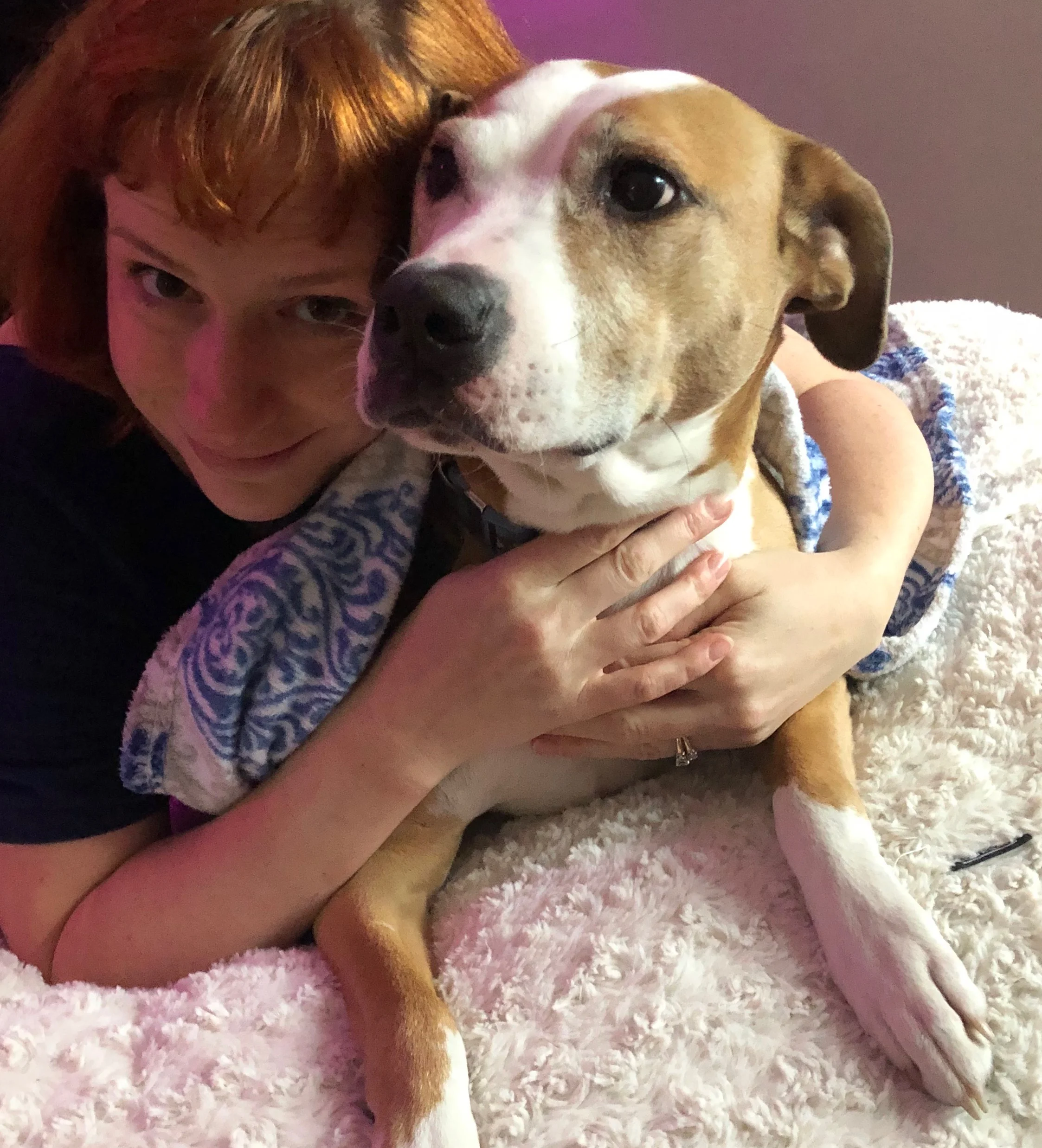
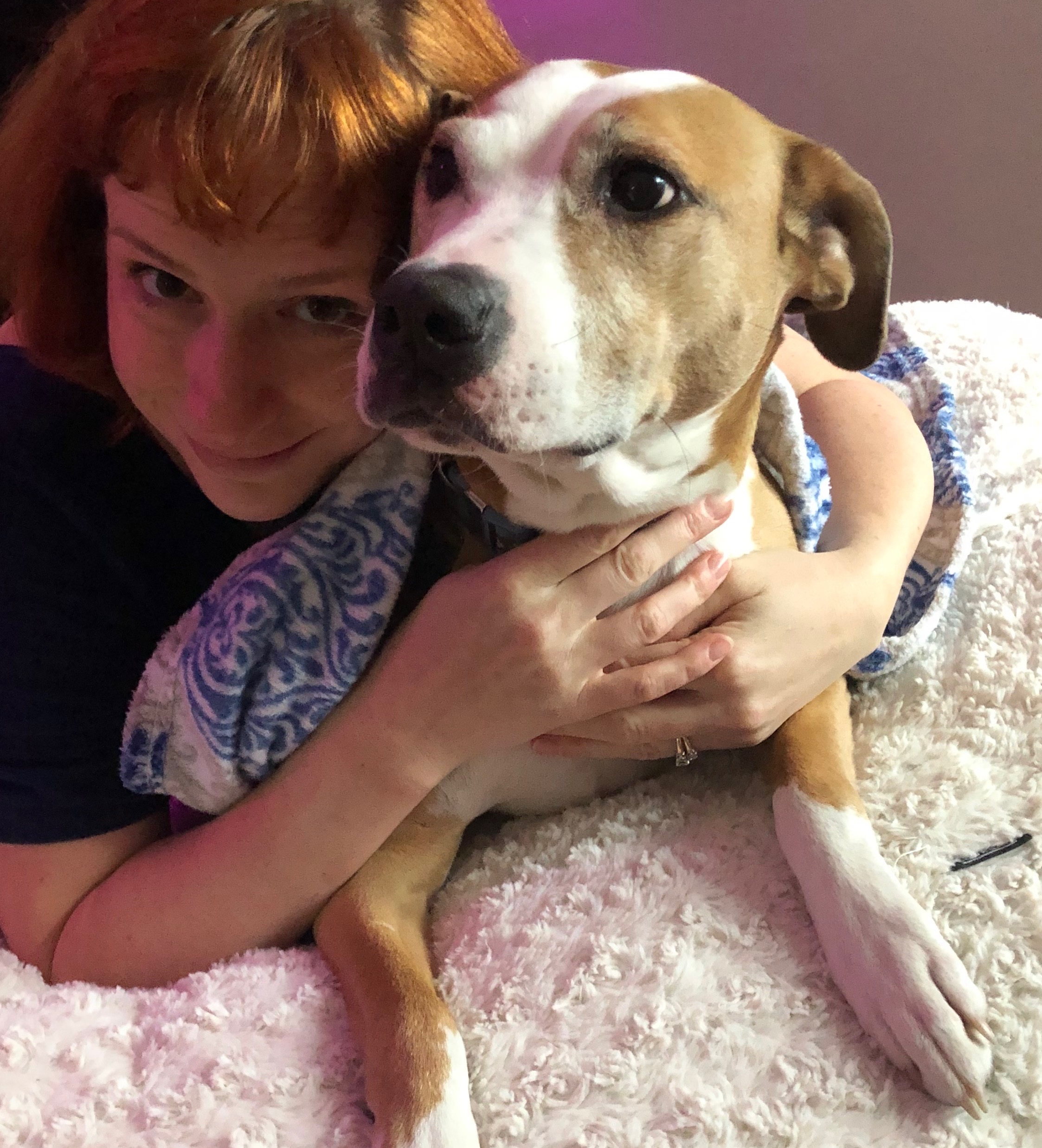
That’s me and Rocky. She’s not mine, but belongs to one of my besties up in Philly. I’d like to think that we have a healthy relationship…

It’s Ok to Feel Ungrateful Sometimes (by Jamie Brazell)
...a shout out to all of those people who are sick and tired of hearing how they ought to be grateful.

As we prepare for the Thanksgiving holiday in the U.S. of A., I’d like to take a moment to give a shout out to all of those people who are sick and tired of hearing how they ought to be grateful.
Holidays can be really hard for a lot of people - especially those who suffer from depression, grief, anxiety, PTSD, or those who have survived an incredibly difficult upbringing with emotionally abusive caretakers or peers. This time of year can bring up all sorts of painful memories, stress over finances, and cause a person experiencing loneliness to feel like they have a giant magnifying glass over them that exposes everything that’s missing from their lives.
If any of this sounds familiar, I’m talking to you.
I get it - holidays can really suck for some of us humans. And yes, it can be helpful to think about all of the things in your life that you should feel thankful for, but sometimes it’s hard to get past those painful memories…and sometimes it can make a person feel worse when they hear that they ought to be feeling differently than are currently feeling.
This may sound controversial (coming from a therapist), but it’s okay to feel sad. It’s okay to feel lonely, lost, empty, afraid, or angry. Do most people want to feel those things? No, I’m sure that we don’t. I’m sure that most people would rather feel all of the happy feelings over the sad ones. We don’t always get a choice in how we’re feeling - just like we don’t always get a choice in what happens to us.
What matters most is what you do with those feelings. This is where you do have a choice.
Understanding where the sad stuff is coming from can be helpful in creating some self-compassion. Please try to be gentle with yourself - as you would be with someone you love unconditionally. Try not to take all of the responsibility over things that have happened to you in the past. If you’re someone who struggles over holidays because of family issues, know that your biological family may not be your logical family and get out there and find your tribe as soon as you can.
If you are feeling depressed, lonely, or if you are grieving - you don’t have to do this alone. Please reach out to someone who will listen, who will offer you validation and connection, someone who will offer you full acceptance. Whenever possible, make the choice to spend time around those who build you up rather than tear you down. If that is not an option for this holiday season, consider the holidays in the future when you may have that option available and know that there are more people out there in the world than those you currently have access to. These hopeful and inspiring creatures may come in many forms - teacher, coworker, neighbor, online support group, or therapist. If you have not had luck in one of those areas, please keep trying because not every person can offer the support you need.
So go ahead and feel ungrateful for the sad or bad things that have happened or that you are currently dealing with in this moment, but please don’t get lost there.
If you can accept that pain and suffering are part of the human condition, there’s also a bright side of experiencing joy that is waiting for you. It's easy to believe that everything is awful when you're in despair, but the truth is that there is always hope for a better tomorrow.
Click here for my resource page if you are experiencing a crisis.
My Secret Weapon Against Sexual Shame (by Jamie Brazell)
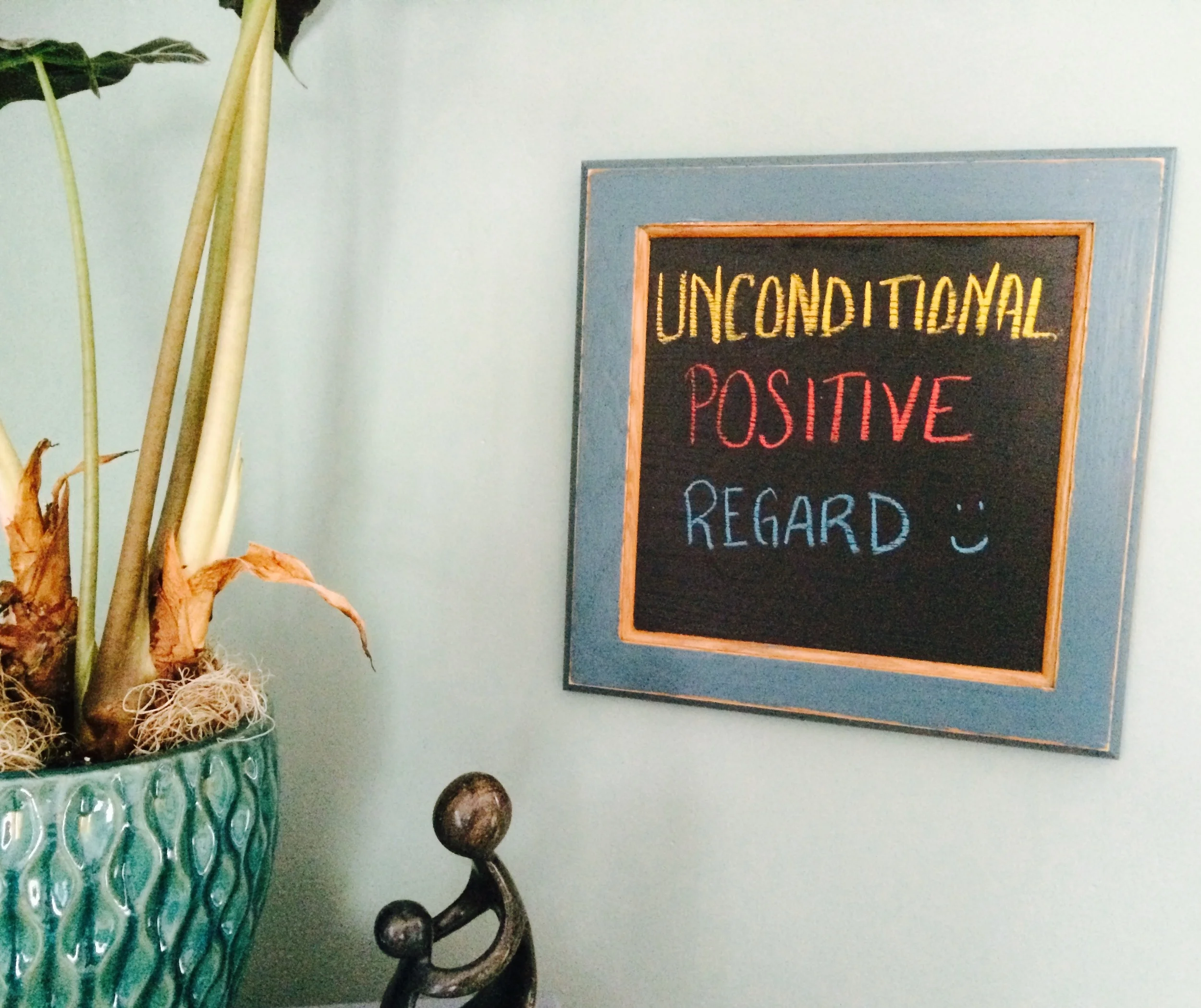
I believe that trust can be built only when a person has room to be who they are and feel that they are accepted without conditions.

According to Carl Rogers, having unconditional positive regard for every client is essential to the effectiveness of the therapeutic relationship.
As a therapist trained in human sexuality, I tend to have a lot of interesting conversations about sex. I’m not just talking about with my clients, of course, because I have plenty of people in my life who want to engage me in discussions about sex and sexuality. (And yes, I can be a lot of fun at parties).
Sex is an interesting topic that is often incredibly personal - so I feel honored that people feel comfortable talking with me about their own sexual stuff.
From these various conversations, the number one underlying issue that I see when it comes to sexual issues or concerns involves a powerful force known as shame.
Think about shame as this invisible assailant who can overwhelm a person to the point where they feel shut down or unable to take action. It can be devastating. Guilt, on the other hand, which is often confused with shame, will cause a person to take action out of this sense of feeling bad and wanting to make amends of some sort. Guilt is more of an action-oriented force while shame will make a person want to hide under the covers and hope nobody notices.
Here are some ways I’ve encountered
sexual shame in others:
Internalized Homophobia - One of the most heartbreaking statements I’ve ever heard someone say was, “I am an abomination.” And they really believed it at the time.
Underlying questions of: Am I okay? or Is this okay? about sexual behaviors- for example, “I get turned on by this particular kink…but I think it’s really weird.”
Sexual abuse survivors often (not always, but often) express a variety of shame-based feelings.
Statements like, “My body isn’t performing as it should and therefore I’m not man-enough (or woman-enough or person-enough); I’m somehow broken and it’s all my fault.”
Slut-Shaming - “If I tell my partner (or anyone) the truth about my sexual history, they won’t accept me and they’ll think I’m a total slut.”
Sexual shame is particularly powerful because it tends to rob people of accepting sexual pleasure. It can create inhibition, insecurities, or isolation. It can convince someone that the sexual abuse they experienced was somehow their fault. It can convince a person that they are fundamentally flawed because they were taught that their desires are wrong. It can impact relationships and cause great divides between people.
Because shame causes us to hide, it can be especially challenging for a person to communicate these feelings or parts of themselves. Think about how destructive that can be for relationships - because when there is no communication, the only thing people have to operate on is their imaginations. While it’s very typical (and probably an inherent biological survival function) for humans to create assumptions, imagine what would happen if we only operated on our assumptions.
I believe that the first step in overcoming shame is to realize what it is, where it comes from, and how it is causing destruction on the self and relationships. Identifying that the shame is impeding the healing process can help to unblock movement towards goals. Overcoming shame almost always involves some form of self-acceptance. This can be challenging because it can involve undoing years of negative self-talk that may be based on repetitive messages a person has heard from their families, their communities, or other various cultural associations.
It takes so much courage to fight shame of any kind, but sexual shame is a particularly challenging force because it is so deeply personal and because it can often stay hidden unless we decide to take the risk of reaching out. It can take an immense amount of trust to talk about issues involving sexual shame. I believe that trust can be built only when a person has room to be who they are and feel that they are accepted without conditions. And from earning that trust, my hope is that I can help people to overcome that shame and put it to rest for good.
My secret weapon against sexual shame involves earning trust by offering what Carl Rogers referred to as unconditional positive regard. Trust is not always easily earned nor easy to give in every situation. The entire time I’ve been writing this, for example, I’ve been thinking about whether or not I believe there are exceptions to fighting shame. I considered the people who experience shame as a result of having done something very harmful towards someone else (such as a perpetrator of sexual violence). My thoughts on this are that it would still be beneficial to fight the shame and turn it into something else - something healing. Societally, we need to do a better job of addressing and treating sexual shame of that nature, too, so that people may receive better treatment options and increase potential for prevention of sexual abuse.

SEVEN Ways That Therapy Can Really Help You (by Jamie Brazell)
When it comes down to it, you want someone who you feel that you can talk to, who you feel like “gets” you, and who you feel like will encourage you to do the things that you want to do to improve your quality of life - no matter how big or small those goals may be.
In case I hadn’t mentioned it before, I consider myself to be a therapy success story. This post has been written with the consideration of two perspectives: from the person in me who greatly benefited from therapeutic counseling at various points throughout my life and from the therapist in me who has had the privilege of working with truly inspiring clients.

You've SO got this.
1. Accountability.
When you are in therapy, you are the most important person in the room. That’s not such a big surprise, of course. But it is interesting when you consider that most of the magic that happens “in therapy” is a result of the actions that you take outside of therapy. I believe that there is an accountability factor that happens - that simply the idea of being in therapy can be enough to motivate a person to start making positive adjustments or thinking about setting new goals. I’ve heard from numerous clients (individuals and couples) about how they started acting differently as soon as they committed to the idea of making the first appointment. And we hadn’t even met yet!
2. The Relationship.
The therapeutic relationship is so important that I can’t stress enough how critical it is to find the right fit for your style, your personality, and your needs. I know enough to know that I can’t possibly be the right fit for everyone. Sure, that breaks my heart ever-so-slightly (because I have that human response of wanting everyone to like me). But the reality is that therapists have different styles, personalities, and specializations.
When it comes down to it, you want someone who you feel that you can talk to, who you feel like “gets” you, and who you feel like will encourage you to do the things that you want to do to improve your quality of life - no matter how big or small those goals may be. The therapeutic relationship is unique, of course, because the primary focus is all about you and your needs. Also - you may have different needs for different life experiences you are having. The therapist who helped you when you were a depressed teenager may not be the same person you want to talk to when you are having relationship issues in later adulthood.
3. Saying it Aloud & Realizing It for the First Time.
Some of us are really good at being in our own heads. This can be true for introverts and extroverts. Sometimes we carry our thoughts with us and don’t have opportunities to exercise where those thoughts could go. Have you ever had one of those moments when you were talking to someone about things you’d been thinking of (or ruminating over) and had a realization that had not been evident before (even though you’d spent a great deal of time thinking about things that were relating to this epiphany)? I’ve experienced this firsthand and I’ve also seen it happen with clients hundreds of times as a therapist.
4. Educational Component.
Therapy provides an opportunity for you to learn more about yourself and your relationships with others. No, your therapist doesn’t know you better than you do. You are the ultimate expert on yourself and you know your relationships better than your therapist - but your therapist can offer you tools for creating positive changes or provide a different perspective that may uncover things you had not discovered prior. And if your therapist has a specialization or is an expert on certain topics, you might just learn something new that can contribute to your life in a meaningful way.
5. Explore Parts of Yourself In-Depth without Judgment or Ridicule.
You may have plenty of loved ones in your life who you can talk to about most things, but maybe you can’t talk with them about all things because they might not always know how to respond in the most loving and compassionate of ways. (And sometimes people are so well-meaning, but they really don’t know what to say). Or maybe you have a hard time talking with anyone about things that are deeply personal, but need to work some things out by talking with another human being. Therapy, at its best, provides the opportunity to express your thoughts and feelings without judgment or ridicule. I know that not all therapy experiences come with this built-in philosophy of acceptance, but it is extremely important and can be a good indicator that you’ve found your right fit when you feel comfortable expressing yourself to your therapist.
6. Repeating Stories.
This helps people to move on, take action, or sometimes just make sense of it all. Sometimes you might need to talk about something over and over again until you don’t need to talk about it anymore. You may find that the narrative changes over time because your feelings may start to change about the experience after processing it and thinking from various perspectives.
7. Therapy Can be Reassuring and Empowering.
I think of this person often who told me they wanted me to fix them. My response was, “What if we find out that you’re not really broken?” But sometimes we feel broken when we’re going through something terrible or when terrible parts of our past have come back to haunt us in the present. Therapy may be a chance for you to discover that you’re okay for who you are, that you have reasons for feeling the way that you do, and that you have options for making positive changes in your life.
So do you always need a therapist in order to obtain a therapeutic experience or a therapeutic relationship? Not always. Animals are really great listeners who won't judge or ridicule (most of the time, at least). They also provide a lot of teachable moments, too.
Thank you for reading this. Have an amazing day.

In memory of Artemis - who provided a therapeutic relationship without ever knowing he was doing that.